

Hi there! 👋
Impact is no longer something companies can manage at the edges. From automakers embedding life-cycle emissions into core strategy, to regulators exposing the cost of unverified sustainability claims, and courts challenging whether products themselves create social harm, the focus has firmly shifted from promises to proof. Sustainability has become a direct test of business credibility, operational discipline, and long-term resilience, where real leadership now means redesigning how value is created, not just how it is reported. Dive in for more! 🌱


1. UK regulator bans “greenwashed” ads by top fashion brands. 🧥⚖️
The UK Advertising Standards Authority has banned sustainability advertisements from Nike, Lacoste, and Superdry for making broad and unsubstantiated claims around “sustainable materials” and environmentally responsible fashion. The ruling raises the compliance bar for sustainability marketing, forcing brands to move from vague storytelling toward data backed product claims, while also creating the risk that companies retreat into cautious silence rather than pursuing genuine product innovation.
2. Landmark US lawsuit accuses big food brands of engineering addictive unhealthy products. 🍔 ⚠️
San Francisco has filed a lawsuit against major food and beverage companies alleging they deliberately engineered ultra processed foods to be addictive while obscuring known health risks and prioritizing profit over public welfare. This case elevates product stewardship and design ethics into major ESG risk domains, compelling companies to confront health externalities embedded in their core business models, even as reliance on slow litigation may delay the faster impact that direct nutritional regulation could achieve.
3. BMW commits to deeper decarbonization with new 2035 targets. 🚗🌍
BMW has announced a new mid term climate goal to cut CO₂ equivalent emissions by at least 60 million metric tons by 2035 versus 2019, covering full lifecycle emissions from raw material sourcing through manufacturing, vehicle use, and supply chain operations. This expands its decarbonization strategy beyond tailpipe emissions into supplier engagement, materials redesign, and use phase accountability, signaling a shift toward true systems decarbonization in capital intensive industries where success will depend on delivering real supplier and materials transformation rather than relying on headline commitments.

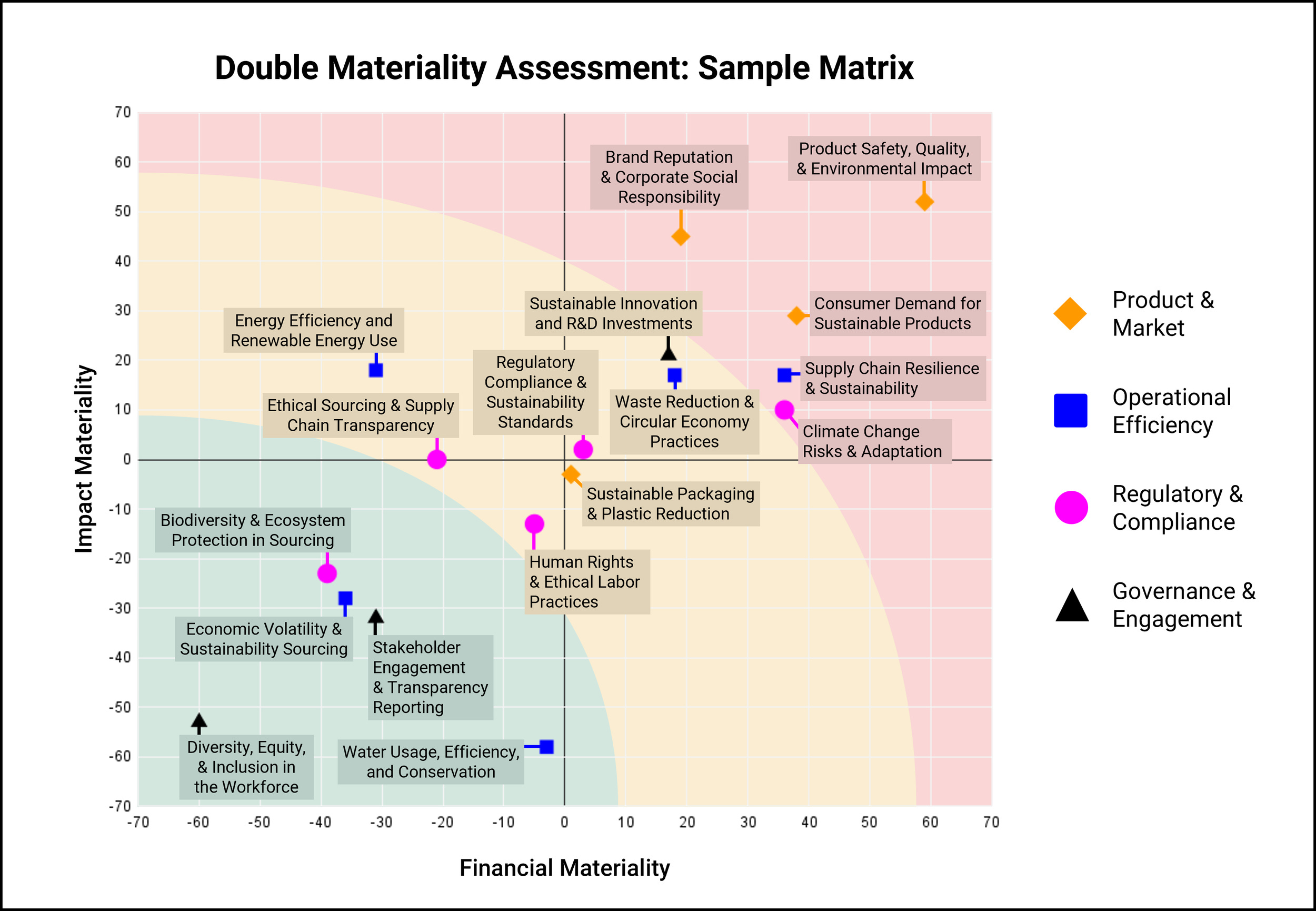
This week we turn to the Double Materiality Matrix, a practical strategic tool that helps companies assess outward environmental and social impacts on communities, climate, and ecosystems alongside inward business risks and opportunities such as cost volatility, regulation, supply chain disruption, litigation exposure, and brand trust, ensuring sustainability initiatives strengthen both stakeholder outcomes and enterprise resilience 🏢.
How to apply the tool in practice 🛠️
Define and assess impact and value risk 🔍
Map ESG issues across the value chain and score each on two dimensions, severity of real world environmental and social impact and magnitude of financial risk or opportunity to the business.
Prioritize where impact meets strategy 🎯
Plot the scores into the matrix to isolate high priority issues where societal harm and enterprise value at risk converge, forming a focused sustainability agenda grounded in commercial relevance.
Convert priorities into core business action 🚀
Translate priority topics into operational decisions such as supplier transitions, product redesign, investment reallocation, and executive incentives so sustainability investments directly reinforce competitiveness and long term growth.
Read how Telefónica uses double materiality assessments to identify “Impacts, Risks and Opportunities” and hard wire them into strategy, capital allocation, and decision making, updating the analysis annually to reflect evolving stakeholder expectations and regulatory requirements. Read more here. 🔗

As EU sustainability regulations rapidly expand in scope and enforcement, this platform provides timely context and structured learning to help companies interpret what rules like the Corporate Sustainability Reporting Directive and the European Due Diligence Regulation actually mean for operations, supply chains, reporting systems, and governance models. 🇪🇺⚡

Through live expert briefings and on-demand modules, it translates regulatory complexity into practical implementation guidance, supporting sustainability managers as they move from compliance understanding to strategic integration across business functions. Learn more here. 🚀🌍

Missed our last poll? Vote here. 📘
Missed our recent issues? Catch up anytime by reading our full archive here 📖.
That’s it for today’s roundup! We’ll see you next Thursday with another set of inspiring sustainability news and updates. Until then, take a moment to reflect on how you can adopt one new sustainable practice this week. Every small step counts! 🌍✨
Have any thoughts or a sustainable practice you'd like to share? Share your feedback here.
Together, we can make a difference. See you in the next edition of the Sustainability Roundup!