

Welcome to Sustainability Roundup!
This week’s developments signal a more uncomfortable phase of the sustainability transition where ambition is colliding with economic reality and regulatory scrutiny. From stricter disclosure enforcement to capital allocation shifts and policy driven bets, the focus is no longer on setting targets but on proving viability, credibility, and strategic resilience in an increasingly uncertain world.
Dive in more!

1. Iran war an “abject lesson” on fossil fuel dependence, UN climate chief says
The disruption of nearly 20% of global oil and LNG flows through the Strait of Hormuz has triggered a sharp price surge, pushing oil above $100 per barrel and exposing the structural vulnerability of global energy systems. UN climate chief Simon Stiell termed it an “abject lesson” in fossil fuel dependence, reinforcing how geopolitical shocks can rapidly translate into economic instability. While the crisis strengthens the case for energy transition, it also reveals a critical gap where short term energy security responses may reinforce fossil fuel reliance rather than accelerate structural change. The immediate reaction prioritizes supply stability over transition speed, highlighting a persistent tension between resilience and decarbonization.
2. Countries in Europe and Asia relax energy rules amid supply fears
Surging energy prices are forcing governments across Europe and Asia to roll back climate measures, revive coal, and expand subsidies to maintain affordability and stability. From South Korea restarting nuclear and boosting coal to the EU easing LNG rules, the response signals a clear shift where short term energy security is overriding long term decarbonisation commitments. While politically inevitable, this exposes how current transition pathways are not yet resilient to economic shocks, raising concerns that climate strategies remain structurally dependent on stable market conditions rather than built for volatility. The transition is being stress tested and revealing critical gaps between ambition and system readiness.
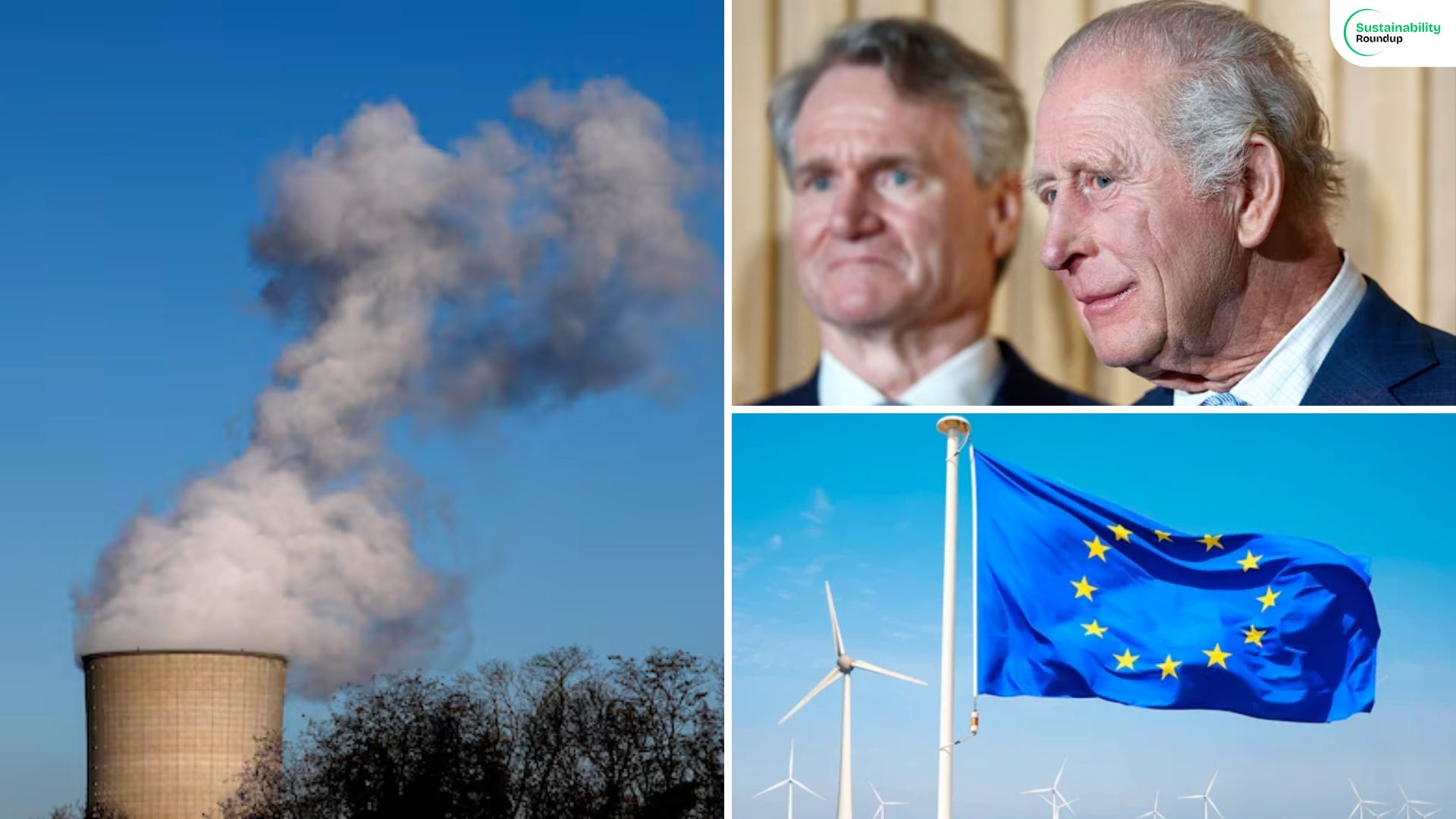
3. King Charles’s green Davos highlights $2 trillion sustainability economy
At a major CEO summit under the Sustainable Markets Initiative led by King Charles, over 200 global business leaders gathered as annual energy transition investments surpassed $2 trillion globally. The discussion has shifted decisively from ESG commitments to financial fundamentals including climate risk, water scarcity, and supply chain disruptions shaping capital allocation decisions. While this signals that sustainability is becoming economically embedded, the concentration of investment in specific regions like China raises questions on uneven global transition progress. Sustainability is no longer a narrative lever but a competitive and financial imperative, though not yet evenly distributed across markets.

The Van Tulder SDG Framework reframes sustainability as a system level coordination challenge rather than a firm level optimization problem, requiring companies to operate across three layers macro system challenges, meso partnerships, and micro business models. It is particularly relevant in a VUCA world where volatility, uncertainty, complexity, and ambiguity weaken traditional governance structures and make isolated corporate action insufficient. Its core strength lies in recognizing that value creation increasingly depends on managing interdependencies across stakeholders, while the concept of “tipping points” pushes firms beyond incremental risk mitigation toward business models that generate positive societal impact.
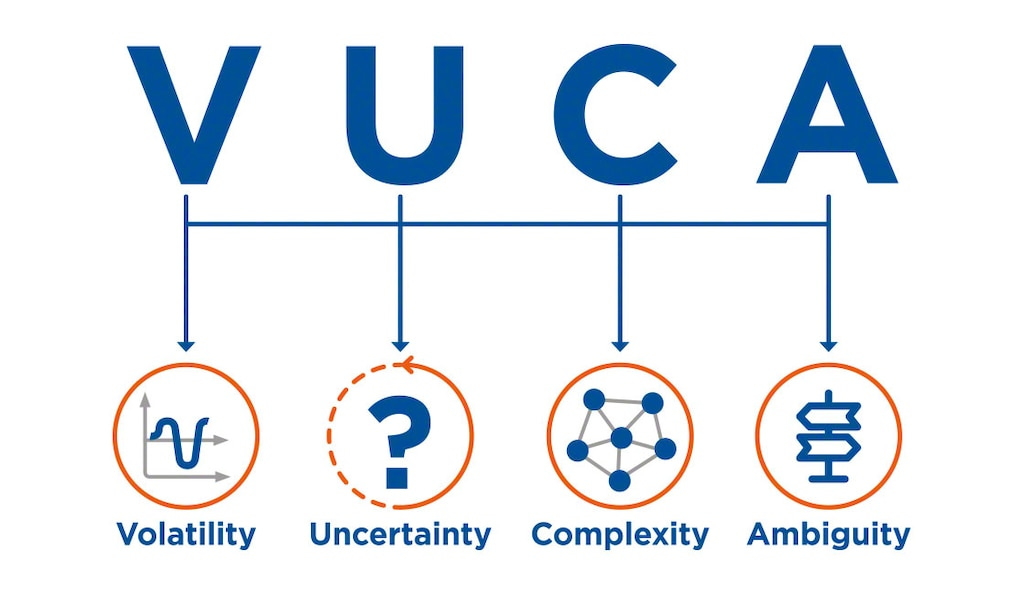
At a strategic level, the framework translates into three imperatives:
Macro system challenges align business strategy with societal priorities where firms must choose where they can realistically influence outcomes rather than broadly commit.
Meso partnerships shift execution from control to collaboration but require selective alliances to avoid diluted accountability and slow decision making.
Micro business models embed sustainability into value creation but only deliver advantage when linked directly to revenue, cost structure, and competitive positioning.
However, the framework assumes a level of institutional alignment and partnership effectiveness that is often absent in practice, particularly in VUCA contexts where incentives are misaligned and coordination costs are high. For leadership teams, the implication is how sustainability advantage will come from selectively shaping ecosystems not simply participating in them. Read more here.

In northern Syria, informal oil refineries expose workers to extreme health and environmental risks, yet remain essential for survival due to lack of alternatives. This reveals a critical gap in sustainability thinking where frameworks often ignore fragile, conflict driven economies.
Watch how it highlights that sustainability is not always a transition choice but a constraint shaped by context, and interventions that ignore this risk deepening inequality rather than solving it. The consequence is a parallel, high risk supply chain system that persists outside regulation, embedding hidden social and environmental costs into global markets. For businesses, true sustainable sourcing requires moving beyond compliance to addressing underlying socio economic realities, not just environmental metrics.

Last week’s poll signals a clear strategic shift with nature risks now viewed as core business threats rather than peripheral ESG concerns, pushing firms to embed them into risk management, capital allocation, and long term resilience planning. Read our last issue here.
Missed our recent issues? Catch up anytime by reading our full archive here 📖.
That’s it for today’s roundup! We’ll see you next Thursday with another set of inspiring sustainability news and updates. Until then, take a moment to reflect on how you can adopt one new sustainable practice this week. Every small step counts! 🌍✨
Have any thoughts or a sustainable practice you'd like to share? Share your feedback here.
Together, we can make a difference. See you in the next edition of the Sustainability Roundup!