

Welcome to Sustainability Roundup’s 30th edition!
This week energy security debate rise in Europe, geopolitical shocks affecting global oil markets, and evolving carbon market policies show that climate action is unfolding within a complex landscape of economic stability, political decisions, and resource constraints. The challenge is no longer simply committing to sustainability but integrating it into resilient strategies that balance decarbonisation, energy reliability, and long term resource security.
Scroll for more!


1. Europe Reopens the Nuclear Debate as Energy Security Concerns Grow
European Commission leadership acknowledged that scaling down nuclear power in parts of Europe may have been a strategic miscalculation as the region now struggles to balance decarbonisation goals with reliable electricity supply. The renewed debate highlights a broader shift in transition thinking where policymakers are reassessing the role of firm low carbon energy sources alongside renewables. It also exposes how energy transition pathways require careful system planning rather than relying on single technology solutions. The episode signals that credible climate strategies must integrate energy security, infrastructure resilience, and long term policy stability.
2. Oil Prices Cross $100 as Middle East Tensions Disrupt Energy Markets
Oil prices surged past $100 per barrel after attacks on shipping routes in the Gulf disrupted global energy supply chains and unsettled financial markets. The spike demonstrates how geopolitical instability can quickly influence energy costs even as the world accelerates investment in renewable technologies. While the disruption reinforces the urgency of diversifying energy systems, it also illustrates the continuing role of fossil fuels in the global economy during the transition period. The development underscores the importance of building resilient energy strategies that combine decarbonisation with supply security and long term cost stability.
3. EU Leaders Push to Reform the Carbon Market Amid Price Volatility
European governments are considering reforms to the EU carbon market to stabilise prices and strengthen the effectiveness of the bloc’s central climate policy instrument. The discussion reflects the growing recognition that carbon pricing mechanisms are not only environmental tools but also key economic signals shaping industrial investment and competitiveness. While adjustments aim to improve market stability, they also highlight the challenge of maintaining predictable policy frameworks while responding to economic pressures. The development reinforces the need to integrate carbon pricing assumptions into long term investment planning and transition strategies.

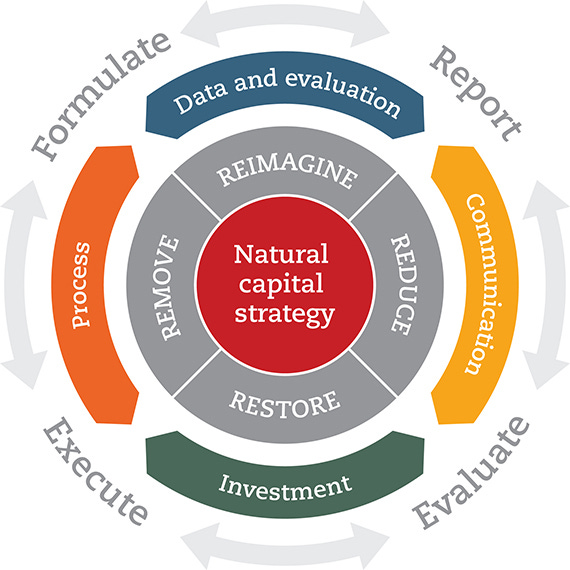
The Natural Capital Strategy approach typically begins with a natural capital assessment to identify which ecosystem services are most critical to business operations. Companies then integrate these insights into strategy through actions such as sustainable sourcing, regenerative agriculture, water stewardship, and ecosystem restoration to strengthen supply chain resilience.
Identify and prioritise nature critical value chain dependencies
Managers should begin by mapping where the business relies on ecosystem services such as water availability, soil fertility, forests, and biodiversity across the value chain. This analysis helps identify which natural assets are most material to revenue generation, operational continuity, and supply chain stability. By focusing on the most strategically exposed areas, companies can prioritise sustainability actions where environmental risk directly intersects with business performance.
Translate environmental exposure into strategic risk metrics
Once critical dependencies are identified, leaders should quantify how environmental pressures such as water scarcity, land degradation, or biodiversity loss could translate into financial, operational, or regulatory risk. Integrating these insights into enterprise risk management, procurement strategy, and capital allocation allows sustainability considerations to shape real investment and operational decisions rather than remain a standalone ESG exercise.
Redesign supply chains and operations for ecosystem resilience
The final step is to convert insights into structural operational changes that protect natural capital while strengthening business resilience. This may involve shifting toward regenerative agriculture, implementing responsible sourcing standards, improving water stewardship, or collaborating with suppliers to restore critical ecosystems. Companies that embed these actions into core operations can reduce long term resource volatility while securing more resilient and future ready supply chains.
Natural Capital Strategy is becoming increasingly important as frameworks such as the Taskforce on Nature related Financial Disclosures require companies to assess and disclose nature related risks. Businesses that integrate ecosystem dependencies such as water, soil, and biodiversity into supply chain and investment decisions are better positioned to manage resource constraints and operational disruptions.
Image courtesy: ACCA Global

Listen to how “The Climate Cost of War” examines the hidden carbon footprint of armed conflict, exploring emissions from military operations, weapons systems, and supply chains while discussing conflicts such as Gaza and Ukraine and how militaries increasingly view climate change as a strategic security risk. Listen to the episode here.

While the discussion highlights the military’s growing awareness of climate risks, it also raises a critical question about whether meaningful emissions reductions are possible in defence sectors that prioritise security and operational readiness over climate commitments.


Missed our recent issues? Catch up anytime by reading our full archive here 📖.
That’s it for today’s roundup! We’ll see you next Thursday with another set of inspiring sustainability news and updates. Until then, take a moment to reflect on how you can adopt one new sustainable practice this week. Every small step counts! 🌍✨
Have any thoughts or a sustainable practice you'd like to share? Share your feedback here.
Together, we can make a difference. See you in the next edition of the Sustainability Roundup!