

Hi there! 🌍
This week’s Sustainability Roundup brings clear signals of how fast sustainability is evolving. From innovative free Google’s tool to green-industrial momentum and rising expectations for credible data, the focus is shifting from promises to real systems that deliver impact. Let’s dive into what’s shaping the conversation. 🌱✨


1. World’s First Climate Impact Bond Launches to Secure Weather Data Financing. 💸
A landmark Systematic Observation Impact Bond backed by UN agencies aims to mobilize USD 200 million for critical weather and climate observation systems in vulnerable countries. Investor returns are tied to independently verified improvements in shared global climate data, creating a performance-based model for strengthening early warning systems and resilience infrastructure. This marks a major evolution in blended finance as investors begin supporting public-good climate infrastructure through outcome-driven instruments, though the complexity of such mechanisms may slow down deployment in regions where speed and simplicity are most needed.
2. Google Launches Free Tool to Help Manufacturers Sniff Out Energy-Efficiency Opportunities. ⚙️🔍
Google has rolled out a new Energy Assessment platform aimed at manufacturers, enabling them to analyse more than 20 systems from air compressors to lighting in order to prioritise upgrades that deliver cost savings and carbon cut-backs. The move signals that energy efficiency is becoming a strategic business lever, not just a sustainability checkbox. While the tool lowers barriers like consultant fees and in-house expertise, manufacturers may still face challenges tying identified opportunities to capital investments and supply-chain rollout. The new tool was funded by Google, designed, built, and is operated by Together Creative, with its calculation methodology and input data sets developed by consulting firms Jacobs and Anew Consulting. View tool here.
3. UNICEF Report Hails Major Progress on Child Poverty Reduction in India. 🇮🇳📉
The 2025 State of the World’s Children Report highlights India’s progress toward SDG 1.2, noting that 248 million people escaped multidimensional poverty between 2013 and 2023. Expanded social protection systems and improved access to health, education and nutrition services have driven consistent improvements in child well-being. This progress strengthens future labour markets and consumer bases, offering long-term stability for businesses operating in the region, even as climate-related shocks and fiscal pressures present ongoing risks that could reverse gains without sustained investment in community resilience.

This week we turn to the Framework for Strategic Sustainable Development, a whole-systems approach that helps organisations embed sustainability directly into commercial strategy. The framework uses backcasting from clearly defined sustainability principles, allowing leaders to picture the future state their organisation must reach and then design the most efficient sequence of actions to get there. It replaces reactive, issue-by-issue decision-making with a unified structure that aligns product design, procurement, operations and governance around long-term value creation. 🧭✨
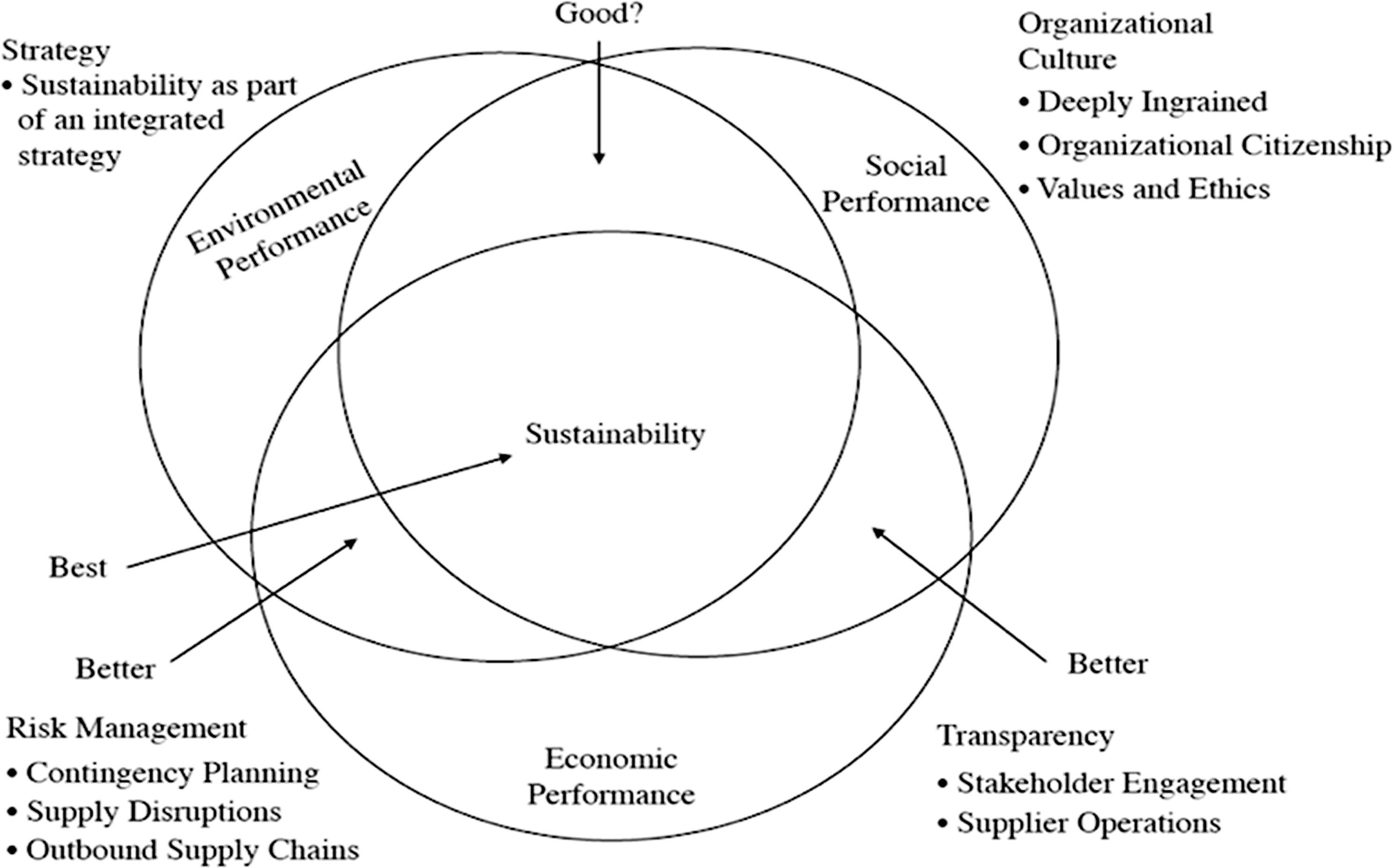
Supporting research by Laurin and Fantazy demonstrates how IKEA embedded environmental and social criteria into sourcing and material choices, improving both sustainability outcomes and supply-chain performance. Their study show how a forward-looking framework can accelerate innovation, strengthen supplier ecosystems and reduce long-term business risk. 📦
At its core, the Framework for Strategic Sustainable Development enables leaders to shift from tactical problem-solving to strategic system-building, creating a pathway that links today’s actions to a resilient, competitive and future-fit business model. Read the full research here. 📘
Image courtesy: Journal of Cleaner Production, “Strategic integration of sustainability performance in organisational architecture” (2024).

Retailers are rapidly rewriting what sustainability readiness means, and Maggie Spicer captures this shift powerfully in a short Instagram reel. She explains how major retailers are moving away from broad ESG storytelling and instead demanding granular, product-level sustainability data that can plug directly into procurement, category management and supplier evaluation. 🛒
This shift means suppliers are now judged by the accuracy, comparability and decision-usefulness of their data, not polished narratives or marketing claims - a fundamental reset that is turning sustainability from a reporting exercise into a hard commercial capability. ⚠️

Results from our show that credibility in sustainability is shifting toward hard-data areas like carbon integrity and climate risk, while labour and biodiversity remain underweighted, exposing gaps in holistic strategy and stakeholder expectations. Read our last issue here. 💚

Missed our recent issues? Catch up anytime by reading our full archive here 📖.
That’s it for today’s roundup! We’ll see you next Thursday with another set of inspiring sustainability news and updates. Until then, take a moment to reflect on how you can adopt one new sustainable practice this week. Every small step counts! 🌍✨
Have any thoughts or a sustainable practice you'd like to share? Share your feedback here.
Together, we can make a difference. See you in the next edition of the Sustainability Roundup!