

Welcome back to this week’s Sustainability Roundup!
Who decides what makes a target credible? The world’s leading standards body failed to agree on what a net zero plan should look like. The UK softened its climate reporting rules just as companies were preparing to comply. Meanwhile, the EU made it law that any climate pledge aimed at consumers must come with a time bound plan and independent checks. The global rulebook is fragmenting, which means organisations must build credibility into their goals themselves. That is exactly where this week’s deep dive on SMART goals comes in. Scroll for more!


1. ISO’s Net Zero Standard Fails Its First Vote
ISO’s proposed net zero standard, designed to help organisations build credible transition plans, failed to win the two thirds approval it needed, after a record of nearly 5,000 comments during consultation. ISO did not disclose how members voted, but media reports point to opposition from fossil fuel producing countries. The setback shows the limits of consensus based standard setting, where the countries with the most to lose can slow down what counts as credible. The record feedback also shows how badly companies want a common definition. For businesses, the message is clear: don’t wait for a single global rulebook, and anchor targets to science based frameworks such as SBTi that investors already recognise.
2. UK Drops Mandatory IFRS Based Climate Reporting for Listed Companies
The Financial Conduct Authority will require UK listed companies to report against the UK’s ISSB based standards on a comply or explain basis, rather than making them mandatory, starting with accounting periods from January 2027. Relief for general sustainability disclosures and Scope 3 emissions remains in place, with the regulator citing the burden on smaller companies. The move protects smaller firms but weakens comparability, and comply or explain often becomes explain by default. It also dents the UK’s image as an early champion of the ISSB standards. For leaders, the smarter play is to comply anyway, because investors will read every explanation as a signal of weak readiness.
3. EU’s New Anti Greenwashing Rules Take Effect
The EU’s Empowering Consumers for the Green Transition directive now bans generic claims like “environmentally friendly” without proof, product neutrality claims based on carbon offsets, and sustainability labels that lack official certification. Future climate pledges must also be backed by detailed implementation plans with time bound targets and independent verification. The Commission found that more than half of green claims in the EU were vague or misleading, and 40% were completely unsubstantiated. Enforcement will depend on national authorities and may be uneven at first. Even so, the directive effectively turns well designed, verifiable targets into a legal requirement for consumer facing claims, so marketing and sustainability teams can no longer work in separate lanes.

Most sustainability teams set goals using the SMART test: Specific, Measurable, Achievable, Relevant and Time bound. Last week, we saw that only targets designed to bite actually cut emissions. This week, we go deeper. Building a Practically Useful Theory of Goal Setting and Task Motivation by Edwin Locke and Gary Latham sums up 35 years of research involving more than 40,000 people, over 100 different tasks and at least eight countries. Its findings suggest SMART gets most things right, but one letter may be quietly holding sustainability goals back.
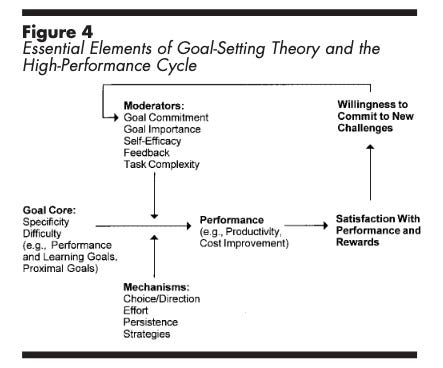
Image courtesy: Fig. 4, Locke & Latham (2002), American Psychologist
Putting it to work: SMART, Sustainability Version
SMART was created as a management checklist in 1981, long before anyone set a net zero target. Here is how sustainability managers can sharpen each letter:
Specific should mean absolute. Name the total you will reduce, not just a ratio that can hide growth.
Measurable should mean what the planet sees. Track total tonnes alongside any efficiency metric, and report progress often enough for teams to adjust.
Achievable should not mean comfortable. The research shows performance climbs with difficulty, so test whether your goal requires new capabilities or simply packages savings already in the pipeline.
Relevant should mean fit for your starting point. Focus on your biggest impacts, and for complex areas like Scope 3, set learning goals first, such as mapping your top suppliers, before locking in reduction targets.
Time bound should mean long term with checkpoints. Pair a long horizon with annual milestones and regular feedback, so the goal drives transformation while teams stay accountable.
The research reframes a common assumption: that the safest target is one you know you can hit. In reality, the “A” in SMART often pulls ambition down to what feels realistic today. The best sustainability goals are stretching, specific and backed by commitment and feedback, which is also what regulators like the EU are now starting to demand.
If difficult goals need commitment, should companies tie executive bonuses to sustainability targets? A study suggests money can actually weaken target completion. Next Monday, we will look at when sustainability linked pay drives results and when it backfires.

Listen to how sustainability leaders can translate nature's value into terms that boards understand and act on. The strategic lesson for any organisation is that even the best designed goal fails without leadership commitment, and commitment comes from showing the economic case, not just the environmental one.
Leaders who frame sustainability goals around risk, resilience and value will win the buy-in needed to turn ambitious targets into real action.

Last week's results show readers back ambition, with 42% keeping targets without a full plan. Yet this week's research is clear, stretching goals only deliver when paired with milestones, feedback and real commitment.
Read our last issue here.

Missed our recent issues? Catch up anytime by reading our full archive here 📖.
That’s it for today’s roundup! We’ll see you next Monday with another set of inspiring sustainability news and updates. Until then, take a moment to reflect on how you can adopt one new sustainable practice this week. Every small step counts! 🌍✨
Have any thoughts or a sustainable practice you'd like to share? Share your feedback here.
Together, we can make a difference. See you in the next edition of the Sustainability Roundup!