

Welcome back to this week’s Sustainability Roundup!
This week’s theme is simple, a target is only as good as the plan behind it. Amazon admitted it doesn’t yet know every route to its own net zero goal. Analysts warned that South Africa’s climate targets may be so easy they ask almost nothing of anyone. Meanwhile, a group of shippers showed what it looks like when a target turns into a purchase order. The gap between setting goals and delivering them is becoming the defining test of sustainability leadership.
Scroll for a detailed analysis!


1. Amazon Admits It Does Not Yet Know How It Will Reach Net Zero by 2040
At an Axios event on 22 September, Amazon’s Chief Sustainability Officer Kara Hurst acknowledged that the company does not yet know all the ways it will hit its 2040 net zero goal. Amazon points to its 42 GW clean energy portfolio, yet its carbon intensity rose last year, and it is planning a 7.65 GW gas plant for an AI data centre campus that could emit up to 33 million tonnes of CO2 a year. The candour is refreshing, but a long dated target with no clear pathway looks more like an aspiration than a commitment, especially when leadership leans on intensity metrics. With more than 700 companies now signed up to the Climate Pledge that Amazon co-founded, investors will increasingly ask for transition plans with interim milestones rather than headline pledges.
2. South Africa May Hit Its Climate Targets Without Really Trying
A GroundUp and The Outlier analysis published on 25 September found that South Africa’s 2024 emissions of around 444 million tonnes already sit inside its 2025 target range. Climate Action Tracker says a fair share would mean a 40% cut between 2022 and 2035, while current targets imply only 16% to 29%. Most of the decline since 2008 has come from economic stagnation and power cuts rather than deliberate policy, so hitting the target says little about real progress. For companies, the lesson is uncomfortable: targets met by circumstance rather than strategy will not convince investors, and exporters face growing exposure to carbon border taxes from trading partners.
3. Microsoft and PepsiCo Back the Largest Electric Truck Order in US History
ZET SCALE, a shipper alliance backed by Microsoft and PepsiCo, has placed an initial order for 2,500 battery electric Class 8 trucks, with Tesla as primary manufacturer and Kenworth, Volvo and RIDE as secondary suppliers. The alliance plans to scale to at least 10,000 trucks and uses pooled demand and leasing to reduce the financial risk carriers face when switching technology. This is Scope 3 target setting turned into procurement power, and it shows that collective buying can move markets no single company could shift alone. The risk lies in execution: charging infrastructure, grid capacity and delivery timelines will decide whether the order becomes emissions cuts or stays a headline.

Having a climate target makes no difference to a company’s emissions. That is the uncomfortable headline from Managing Carbon Aspirations: The Influence of Corporate Climate Change Targets on Environmental Performance, in which Dahlmann, Branicki and Brammer tracked more than 1,300 companies across 42 countries. The companies that actually cut emissions were not simply the ones with targets. They were the ones whose targets were truly SMART.
What separates real targets from symbolic ones
Absolute beats intensity - Absolute targets were linked to real emission cuts, but intensity targets were not, and firms with more of them tended to see emissions rise. For example, cutting emissions per car from 10 to 7 tonnes meets a 30% intensity target, but if sales double from 100 to 200 cars, total emissions still climb from 1,000 to 1,400 tonnes.
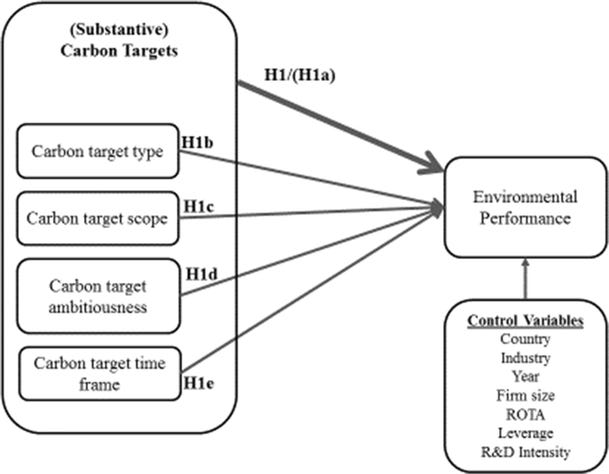
Ambition and time matter - Bigger reduction goals and longer time frames were associated with deeper cuts, which suggests that stretch goals push organisations beyond easy wins.
Context shapes design - For lower carbon firms, absolute and broader scope targets mattered most. For carbon intensive firms, ambition and time frame made the difference.
For sustainability managers, the lesson is to treat target setting as strategy design, not reporting. Start by stress testing your current targets. Would they still deliver cuts if the business doubled in size? If not, an intensity target may be masking absolute growth. Next, check whether your ambition requires new capabilities or simply packages savings already in the pipeline. Then pair a long term destination with interim milestones, so the goal drives transformation while teams stay accountable year to year.
The paper reframes a common assumption that more targets do not mean more commitment. Investors and regulators are getting better at reading the difference, and the design of a target now signals a company’s intent as clearly as the number itself.

Watch how cities and regions are targeting super pollutants like methane, black carbon, and HFCs, the fastest lever available for slowing near term warming. The strategic lesson for any organisation is clear, long term goals stay credible only when paired with near term wins that stakeholders can see and measure.
Rather than waiting for global consensus, focused coalitions are acting now, sharing solutions and building momentum. Leaders who prioritise quick, high impact levers will earn the trust needed for longer transitions.

Last week’s results show that 75% of readers see efficiency labels as a good start, while only 13% want total use capped. Yet this week’s research warns that efficiency targets alone rarely cut absolute emissions. Transparency may be the first step, but it cannot be the last.
Missed our recent issues? Catch up anytime by reading our full archive here 📖.
That’s it for today’s roundup! We’ll see you next Monday with another set of inspiring sustainability news and updates. Until then, take a moment to reflect on how you can adopt one new sustainable practice this week. Every small step counts! 🌍✨
Have any thoughts or a sustainable practice you'd like to share? Share your feedback here.
Together, we can make a difference. See you in the next edition of the Sustainability Roundup!