

Welcome to this week’s Sustainability Roundup!
From regulatory rollbacks in the United States to mounting biodiversity warnings and tighter circular economy mandates in Europe, the sustainability landscape is fragmenting. Policy uncertainty is rising even as ecological and economic risks intensify, forcing companies to navigate a more complex operating environment. The consistent thread this week is not ambition, but resilience: how firms manage volatility, embed nature and climate risk into strategy, and build governance systems strong enough to withstand shifting political and market signals.


1. Trump Administration Rescinds Key Greenhouse Gas Finding
The U.S. has dismantled a foundational climate science finding linking carbon dioxide to health risks, creating regulatory ambiguity and heightened investor concern about cost volatility and capital planning for emissions commitments. This rollback dampens policy stability just when markets and multinational corporations are aligning around global low-carbon standards, forcing a rethink of risk strategies and international compliance pathways. The implication lies in accelerated internal climate governance and hedging against policy inconsistency.
2. Businesses Warned They Could ‘Face Extinction’ Without Nature Action
A landmark IPBES global assessment endorsed by over 150 governments labels biodiversity loss a systemic economic and financial risk, urging companies to embed nature targets into strategy or risk commercial viability. With trillions still funnelled into activities harming ecosystems, this report reframes nature from externality to board-level risk factor, compelling firms to integrate biodiversity into core strategic planning or face competitive attrition. This forces recalibration of risk frameworks to include nature dependence metrics.
3. EU Council Agrees New Rules to Ban Destruction of Unsold Clothing
European legislators have moved to prohibit the destruction of unsold clothing and footwear, tightening circular economy mandates across member states and pressuring brands to redesign supply chain practices. For global retailers this marks a shift from waste tolerance to zero-loss operations, pushing sustainability from compliance into innovation-led product lifecycle management and material efficiency strategies. This signals rising regulatory expectations for waste prevention and product stewardship.

Peters et al. in PNAS show that much of the emissions progress reported by advanced economies between 1990 and 2008 was driven by shifting carbon-intensive production abroad rather than fundamentally reducing overall emissions. While domestic emissions fell or stabilised, consumption-based emissions continued to rise as imports increased, effectively transferring carbon across borders through trade.
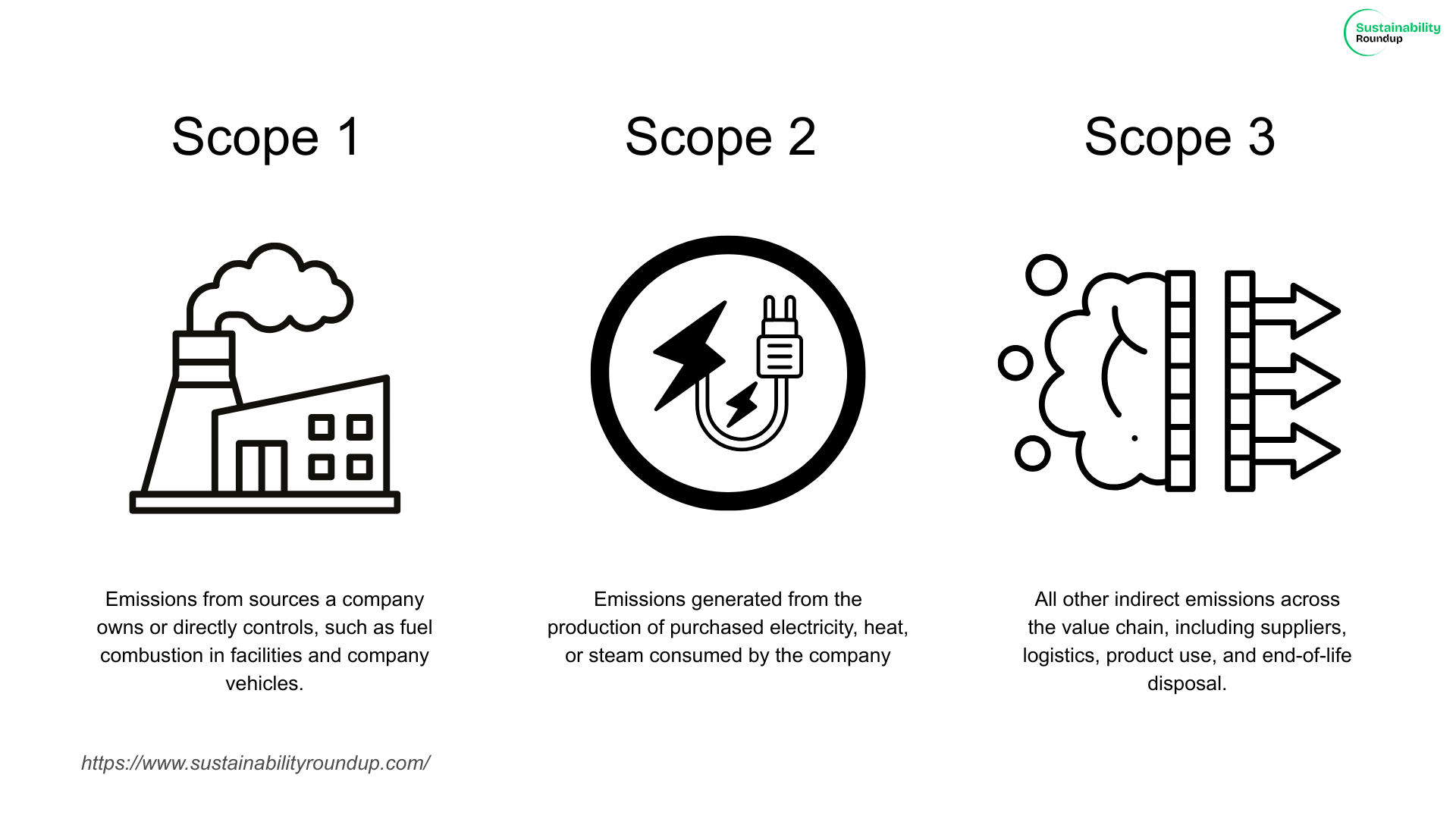
The study shows that international trade has become a structural channel for transferring emissions from wealthier economies to emerging ones. This creates an illusion of decoupling: economies appear to separate growth from emissions domestically, while the carbon required to sustain consumption simply relocates within global supply chains. The same logic applies at the corporate level, where Scope 1 and 2 improvements can coincide with rising Scope 3 emissions embedded in suppliers and product use.
The core insight is simple but powerful. Decoupling cannot be assessed by operational metrics alone. If consumption or revenue growth continues to drive expansion in carbon-intensive value chains, total emissions remain linked to economic activity, even if local indicators improve. Read the full research here.

This recent Circular Economy Show Podcast episode explores the strategic challenge of securing critical minerals for clean energy transitions, unpacking supply chain resilience, demand growth, and circular opportunities to capture value now.
It’s a practical and timely discussion on how circular principles intersect with energy transition imperatives and supply chain risk management.

Last week’s poll results show that with 70% believing carbon removals delay real action, there is clear skepticism toward offset-led climate strategies. The signal for companies is unmistakable: future removal commitments cannot substitute for near-term emissions cuts without eroding stakeholder trust and strategic credibility. Read out last issue here.
Missed our recent issues? Catch up anytime by reading our full archive here 📖.
That’s it for today’s roundup! We’ll see you next Thursday with another set of inspiring sustainability news and updates. Until then, take a moment to reflect on how you can adopt one new sustainable practice this week. Every small step counts! 🌍✨
Have any thoughts or a sustainable practice you'd like to share? Share your feedback here.
Together, we can make a difference. See you in the next edition of the Sustainability Roundup!