

Welcome back to this week’s Sustainability Roundup!
From billion dollar climate losses to evolving trade regulations and the realities of energy transitions, this week's stories highlight a simple truth: sustainability scales when it aligns with competitive advantage. The challenge for sustainability leaders is ensuring that environmental ambition and business performance reinforce rather than undermine each other.
Scroll for more!


1. Nepal’s $2.56 Billion Flood Bill Exposes the Economic Cost of Climate Vulnerability
Nepal estimates recent flood losses at approximately $2.56 billion, highlighting a reality often overlooked in sustainability debates - someone ultimately pays for environmental degradation. While climate risks are frequently treated as future concerns, the costs are already being borne by communities, governments, and businesses at the sharp end of extreme weather events. The bigger issue is that infrastructure, supply chains, and economic planning remain designed around climate conditions that no longer exist. The cost of unsustainability does not disappear, it is simply transferred downstream until someone is forced to absorb it.
2. EU Deforestation Law Could Reshape Global Coffee Trade
The EU’s anti deforestation regulations are beginning to reshape how coffee producers access global markets, with traceability and supply chain transparency becoming prerequisites for trade. While the regulation aims to reduce environmental damage, it may also create barriers for smaller producers who lack the resources to meet compliance requirements. Companies sourcing agricultural commodities can no longer treat sustainability data as optional reporting; it is rapidly becoming market access infrastructure. The unintended consequence may be greater consolidation across global supply chains as compliance costs rise.
3. China’s Renewable Mega Bases Still Depend on Coal, Report Finds
A new report shows that many of China’s large renewable energy projects continue to rely on coal power support, underscoring the complexity of energy transitions at scale. The finding challenges the simplistic narrative that renewable deployment alone guarantees decarbonisation, revealing the importance of grid flexibility, storage, and system level planning. Businesses betting on clean energy growth should pay closer attention to energy system architecture rather than headline renewable capacity figures. The transition is happening, but not as cleanly or as quickly as many assume.

Many sustainability strategies are built on a simple assumption - make a product greener and consumers will reward it. Drawing on Porter’s Cost Leadership and Differentiation theory, the research finds that sustainability only becomes a meaningful competitive advantage when consumers both care about sustainability and have enough information to distinguish genuine action from marketing claims.
The framework highlights two critical variables -
Consumer involvement
Information transparency.
Where both are low, firms are incentivised to compete primarily on cost, and greenwashing can become more attractive than substantive sustainability improvements. Where both are high, companies have stronger incentives to invest in genuine sustainability differentiation because consumers are more likely to recognise and reward credible performance.
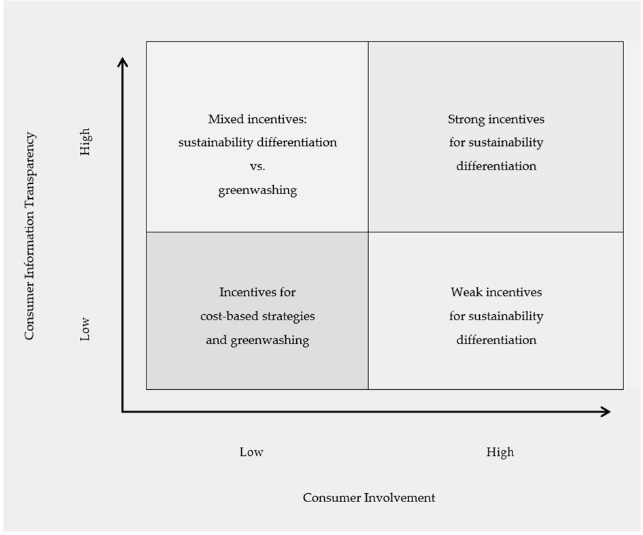
Figure 1: Sustainability Differentiation Incentives Framework. Adapted from Bankel (2026)
Perhaps the paper’s most important finding is that sustainability does not automatically move from niche markets into mainstream markets. Competitive pressures often make sustainability investments difficult to justify unless transparency mechanisms, customer engagement, or regulatory requirements create clear economic incentives. In other words, sustainability is not rewarded simply because it exists; it is rewarded when markets can see it, verify it, and value it.
Read more here.

Listen to how resilience is emerging as the next frontier of sustainability strategy, with businesses increasingly focused on future proofing supply chains, operations, natural systems and economic value creation in an era of growing climate and geopolitical disruption.
Drawing on insights from Peter Gilmer, CEO of The Nest Campus, this episode explores why the concept of the "resilience economy" is gaining traction ahead of Climate Week NYC 2026. The discussion highlights a broader shift from sustainability as a risk management exercise to resilience as a source of competitive advantage, while also examining how technologies such as AI could accelerate progress if deployed thoughtfully and responsibly.

Last week's voters overwhelmingly identified driving business transformation as the defining capability of future sustainability leaders. The result suggests a growing recognition that sustainability's influence increasingly comes from reshaping business models, operations, and value creation rather than managing compliance or risk alone.
Missed our last issue? Read here.
Missed our recent issues? Catch up anytime by reading our full archive here 📖.
That’s it for today’s roundup! We’ll see you next Thursday with another set of inspiring sustainability news and updates. Until then, take a moment to reflect on how you can adopt one new sustainable practice this week. Every small step counts! 🌍✨
Have any thoughts or a sustainable practice you'd like to share? Share your feedback here.
Together, we can make a difference. See you in the next edition of the Sustainability Roundup!