

Hi there!
Markets are increasingly rewarding businesses that can price the future before it arrives. This week's stories highlight how organisations must make investment decisions today amid rising climate risks, evolving regulations and shifting capital markets. Whether adapting to extreme weather, financing nature or scaling clean energy, long term competitiveness will depend on anticipating future costs and opportunities rather than reacting to them.
Find out more below!

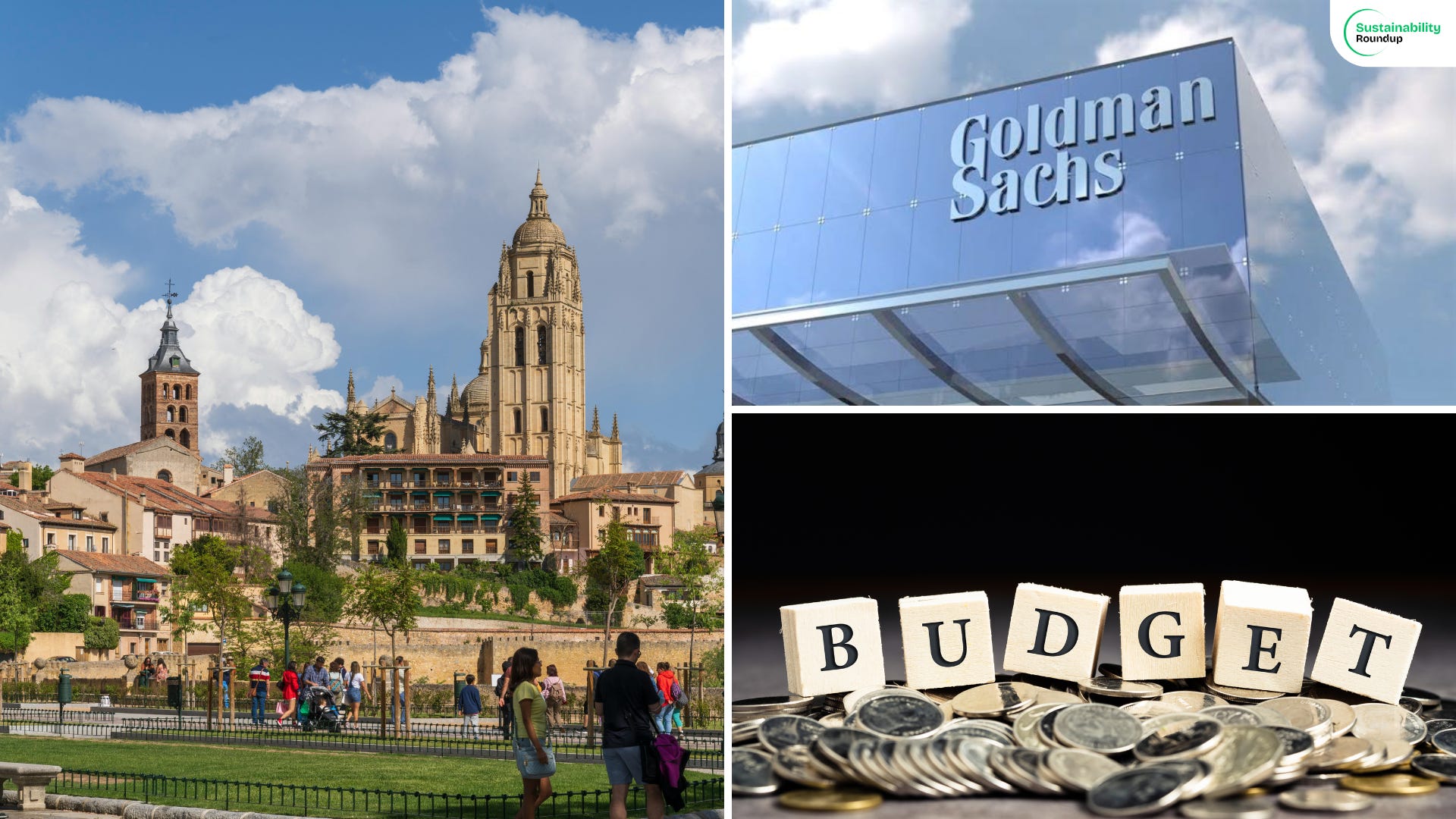
1. Climate Change Made Fire Prone Weather Conditions More Likely in Spain and France
Scientists have found that climate change made the weather conditions driving recent wildfires in Spain and France significantly more likely, reinforcing that extreme weather is becoming a structural business risk rather than an isolated event. The findings challenge the assumption that climate adaptation can be addressed through emergency response alone. Instead, organisations must increasingly invest in climate resilient infrastructure, supply chains and operational planning. As physical climate risks intensify, adaptation is emerging as a strategic capability that protects assets, safeguards business continuity and strengthens long term competitiveness.
2. Biggest Barrier to Nature Based Solutions Investment Is Lack of Stable Revenue Streams, Says GFI
A new report from the Green Finance Institute argues that the biggest obstacle to scaling nature based solutions is not a shortage of capital but the absence of predictable revenue models. The finding shifts the conversation from mobilising finance to designing investable business models. Nature restoration will struggle to attract institutional investors until projects generate reliable, long term cash flows. For businesses, this presents an opportunity to develop innovative financing mechanisms, ecosystem service markets and blended finance structures that transform nature from a philanthropic activity into a commercially viable asset class.
3. Goldman Sachs Acquires RWE’s U.S. Distributed Clean Energy Business
Goldman Sachs Alternatives has agreed to acquire RWE’s U.S. distributed clean energy business, adding more than 300 MW of operating assets and a significant development pipeline. The transaction reflects a broader shift in how financial institutions view the energy transition. Clean energy assets are increasingly valued not only for their environmental benefits but also for their ability to generate stable, infrastructure like returns. As sustainability matures, competitive advantage is moving beyond owning renewable assets to building scalable investment platforms that attract long term capital and accelerate the transition.

Most investment decisions are based on today’s market prices. Shadow Carbon Pricing challenges this approach by assigning an internal cost to greenhouse gas emissions, enabling organisations to evaluate projects against future carbon regulations, transition risks and evolving market expectations. Rather than waiting for policy changes, businesses can use it to make investment decisions that remain profitable in a low carbon economy.
The High Level Commission on Carbon Prices, chaired by Joseph E. Stiglitz and Nicholas Stern (2017), argues that carbon pricing is essential for achieving climate goals while improving economic efficiency. The report concludes that carbon prices of US$50 to US$100 per tonne by 2030 are needed to drive investment towards low carbon technologies and innovation. Key learnings include:
Price Tomorrow’s Risks Today – Incorporating future carbon costs into investment decisions helps organisations avoid carbon intensive assets that may become stranded as regulations tighten.
Make Innovation Investable – Shadow carbon pricing strengthens the business case for low carbon technologies, resource efficiency and cleaner products before market or regulatory pressures emerge.
Tailor the Price to the Risk – There is no universal carbon price. Organisations should align internal carbon prices with their industry, investment horizon and exposure to transition risks.
Turn Carbon into Competitive Advantage – Organisations that embed shadow carbon pricing into strategic decision making can identify future growth opportunities, reduce transition risk and build a lasting competitive advantage before markets and regulations catch up.
As carbon regulation expands globally, shadow carbon pricing is evolving from an environmental accounting tool into a strategic capability for building resilient and future ready businesses.

Why do investors who understand climate risk still struggle to act on it? In this episode, Carbon Tracker's Amy Owens explores the concept of "strategic hesitation" through the case of Norway's sovereign wealth fund, revealing how governance structures, investment mandates and legacy benchmarks can slow climate action.

Missed our recent issues? Catch up anytime by reading our full archive here 📖.
That’s it for today’s roundup! We’ll see you next Thursday with another set of inspiring sustainability news and updates. Until then, take a moment to reflect on how you can adopt one new sustainable practice this week. Every small step counts! 🌍✨
Have any thoughts or a sustainable practice you'd like to share? Share your feedback here.
Together, we can make a difference. See you in the next edition of the Sustainability Roundup!