

Welcome to Sustainability Roundup!
This week marks a decisive pivot from visionary promises to verifiable execution. As global markets bridge the "implementation gap," sustainability has evolved beyond peripheral compliance into the core driver of competitive advantage and capital allocation within an increasingly volatile industrial landscape.
Read how sustainability is being reshaped by regulation, capital markets, and energy security trade offs.


1. EU Bans Vague "Eco-Friendly" Labels Without Hard Evidence
As of late last week, EU member states have officially integrated the Empowering Consumers for the Green Transition (ECGT) Directive into national laws, effectively banning generic environmental claims like "eco-friendly" or "climate neutral" without third-party proof. This legislation is a direct strike at corporate greenwashing, but the immediate pressure on procurement teams to provide primary data for every product claim could inadvertently favor large incumbents with deep tech stacks over smaller, potentially more innovative suppliers. This signals that the "regulatory floor" has risen, turning supply chain traceability from a competitive edge into a mandatory license to operate within the world's largest single market.
2. BlackRock Adjusts Climate Strategy to Prioritize "Financial Materiality"
World’s largest asset manager has issued a strategic update to its stewardship guidelines, shifting the focus from broad climate advocacy to "financial materiality" and how climate risks specifically impact long-term shareholder value. Critics argue this pivot is a tactical retreat in the face of political pressure, potentially weakening the momentum for collective corporate climate action across the global financial system. By narrowing the scope of engagement to purely fiscal impacts, BlackRock is signaling that sustainability must now justify itself through the lens of traditional risk-return profiles, essentially ending the era of "values-based" ESG in favor of hard-nosed transition economics.
3. Italy Postpones Coal Shutdown to 2038 Amid Regional Energy Crisis
In a significant blow to the EU’s unified decarbonization timeline, the Italian parliament voted this week to delay the closure of its remaining coal-fired power plants by 13 years, citing the intensified energy crunch following disruptions in the Strait of Hormuz. This decision exposes the fragile nature of "green" transition plans when confronted with immediate energy security threats, demonstrating that the political appetite for net-zero often stops where a potential national blackout begins. This development serves as a critical warning that strategic autonomy and energy security are currently overriding climate milestones, potentially triggering a "domino effect" of target revisions across other industrial nations facing similar geopolitical volatility.

Game Theory frames sustainability as a system of strategic interdependence where firms must anticipate competitor behavior, regulatory evolution, and stakeholder pressure rather than act in isolation. The concept of Nash equilibrium, introduced by John Nash, explains why industries often settle into low ambition outcomes such as underinvestment or greenwashing, as no single firm benefits from unilateral action.
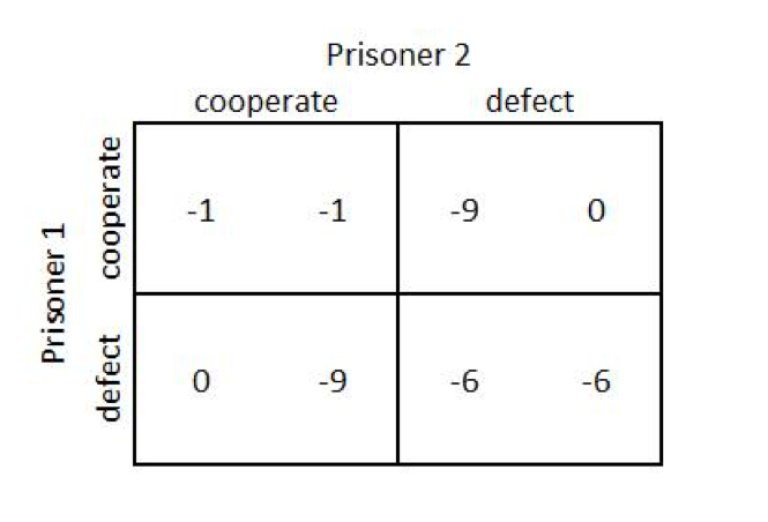
For managers, the application is cross functional. Strategy defines positioning, finance evaluates payoff asymmetry, operations manage cost feasibility, and communications ensure credible signaling. Building on Madani (2015), sustainability challenges resemble coordination failures such as prisoner’s dilemma and tragedy of the commons, where individually rational decisions lead to collectively suboptimal outcomes due to misaligned incentives and lack of trust.
Leading firms do not just compete within the game, they redesign it through coalitions, pre competitive collaboration, and incentive structures that align stakeholders and shift the equilibrium toward shared, value creating outcomes.
Read more here.

Listen to how the strategic risk of "substitution failure," where the clean energy transition risks trading carbon emissions for toxic PFAS contamination.
A structural strategy gap where firms optimized for short term cost and regulatory arbitrage while underpricing long tail chemical risks, revealing that sustainability leadership now requires proactive risk identification, value chain accountability, and anticipating future regulatory tightening rather than reacting to it


Missed our recent issues? Catch up anytime by reading our full archive here 📖.
That’s it for today’s roundup! We’ll see you next Thursday with another set of inspiring sustainability news and updates. Until then, take a moment to reflect on how you can adopt one new sustainable practice this week. Every small step counts! 🌍✨
Have any thoughts or a sustainable practice you'd like to share? Share your feedback here.
Together, we can make a difference. See you in the next edition of the Sustainability Roundup!
honestly… sustainability now feels less like “saving the planet” and more like “following where the money goes.”
regulation tightens → capital moves → suddenly everyone cares about energy transition.
but the messy part? half of it feels real, half of it feels… performative.
net zero sounds nice on paper, but behind it is just countries protecting growth, companies protecting margins, and everyone trying not to fall behind.
so the question is not even “are we sustainable?”
it’s are we actually fixing things or just getting better at looking like we are?