

Hi there! 👋
This week’s sustainability signals are converging around one uncomfortable truth: the rules are fragmenting, but the risks are not. As multilateral climate governance weakens, nature moves to the centre of corporate strategy and sustainability performance becomes commercially visible in real time, responsibility is shifting decisively from institutions to companies themselves. The question is no longer who sets the agenda, but which organisations are structurally prepared to operate when coordination breaks down and scrutiny intensifies.
Dive in for more! 🌱

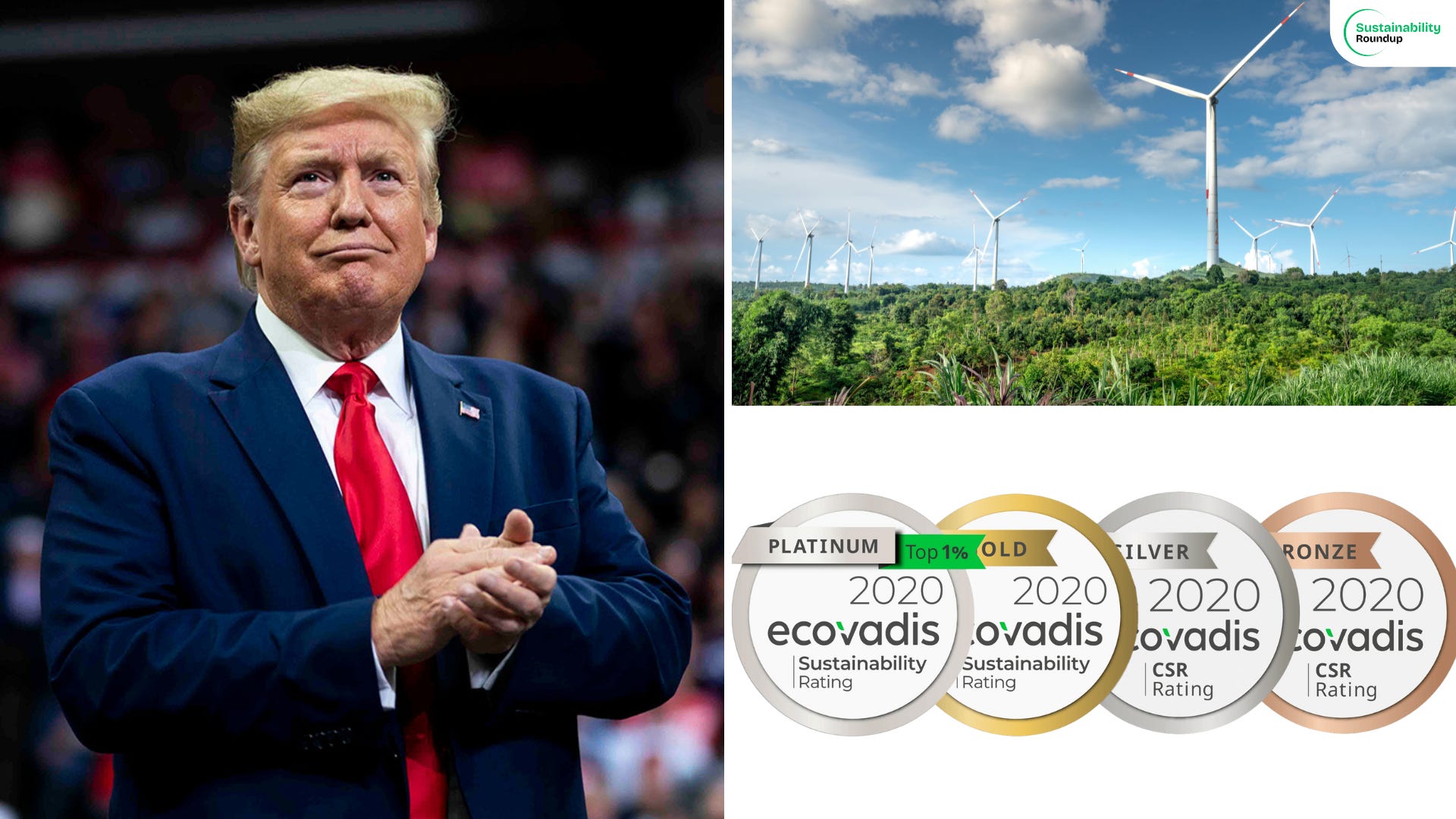
1. Trump withdraws from over 60 international and UN organisations
Trump withdrew from the UN Framework Convention on Climate Change (UNFCCC), along with 65 other organizations, agencies and commissions, calling them “contrary to the interests of the United States” The decision marks a sharp retreat from multilateral climate governance at a time of escalating environmental risk. While framed as protecting national interests, the move weakens coordinated climate action and shifts greater responsibility onto markets, sub-national actors and corporations to sustain momentum without US federal leadership. The withdrawal creates a climate governance vacuum that raises transition risk for global businesses, forcing companies to navigate fragmented climate rules while shouldering more responsibility for maintaining cross-border climate alignment.
2. Why nature should be the new bottom line for business in 2026
Accelerating biodiversity loss is pushing companies to reposition nature as a core strategic priority, even as regulatory support weakens through reporting rollbacks and political resistance in key markets. With over $700 billion in corporate revenue already linked to public nature action plans, market forces are beginning to price nature risk and opportunity faster than policy, raising concerns about the depth and measurability of corporate commitments. Integrating nature into core strategy can enhance resilience and unlock value, but superficial biodiversity pledges risk strategic exposure as expectations harden.
3. EcoVadis Ratings Now Searchable on Amazon Business
Amazon Business enabling sellers to display verified EcoVadis sustainability ratings directly on supplier profiles shifts sustainable procurement from internal policy to an external commercial signal that can influence buying decisions in real time. While this increases transparency and competitive pressure across supply chains, it also risks rewarding score optimisation over genuine operational change if ratings become a proxy for impact. Sustainability performance is becoming a competitive differentiator in platform based procurement, but durable advantage will favour companies that convert ratings into real supply chain capability rather than surface compliance.

The Integrated Materiality Framework shows that sustainability rarely fails due to lack of ambition; it fails because material risks are acknowledged but not enforced as strategic constraints. When environmental and social risks are not embedded into how tradeoffs are resolved, they are systematically deprioritised under cost pressure, speed to market or growth targets.
How to stress-test your strategy:
Decision integrity
Are material’s sustainability risks explicitly considered in every major investment, sourcing and expansion decision, or confined to periodic reporting and reviews?Value linkage
Can each material issue be clearly linked to a business outcome such as cost volatility exposure, supply security, regulatory access, resilience or innovation advantage?Risk visibility
Do leadership teams have forward-looking insight into where environmental and social risks sit across the value chain, or are signals only surfaced after audits, disruptions or reputational events?Governance strength
Are material sustainability risks governed through core enterprise risk and control systems, with clear ownership and escalation, or isolated within ESG functions?Incentive alignment
Do incentives, capital allocation and supplier terms reinforce long-term material outcomes, or do they still reward short-term financial optimisation?
This logic is reinforced by academic research showing that firms that integrate environmental and social issues into their core strategy and business model outperform peers over time, with integrated sustainability linked to resilience, innovation and long-term value creation rather than short-term compliance activities. A landmark study tracking “High Sustainability” companies versus matched peers found that firms with long-term strategic integration of sustainability outperform in profitability and market valuation, demonstrating that sustainability embedded in strategy influences real performance rather than superficial reporting (Eccles and Krzus 2010). Read more here.

The bamboo boom reveals an uncomfortable sustainability illusion. Marketed as a clean alternative to plastic and paper, many bamboo products rely on energy-intensive processing, chemical binders and opaque supply chains that quietly erode their environmental promise. What appears renewable at the surface often shifts impact downstream, from higher emissions to potential health and safety risks, exposing how easily “natural” materials can mask industrial reality.
This is not a failure of bamboo as a resource, but of how sustainability is framed and sold. Companies continue to prioritise marketable substitutions over full lifecycle accountability, while consumers are encouraged to equate material swaps with impact reduction. A credible sustainability outlook demands moving beyond feel-good materials toward system-level design, transparent value chains and decisions grounded in total environmental cost, not green signalling.

Missed our recent issues? Catch up anytime by reading our full archive here 📖.
That’s it for today’s roundup! We’ll see you next Thursday with another set of inspiring sustainability news and updates. Until then, take a moment to reflect on how you can adopt one new sustainable practice this week. Every small step counts! 🌍✨
Have any thoughts or a sustainable practice you'd like to share? Share your feedback here.
Together, we can make a difference. See you in the next edition of the Sustainability Roundup!