

Hi Everyone!
As we celebrate the 50th edition of Sustainability Roundup, we’d like to thank each of you for being part of this journey. Your continued readership, thoughtful feedback and unwavering support have helped build a community of leaders committed to shaping a more sustainable future.
This week’s stories remind us that, for decades, businesses have treated natural resources as inputs to growth rather than constraints on it. That assumption is rapidly changing. From AI infrastructure competing for water resources to worsening wildfire risks and accelerating biodiversity loss, nature is increasingly determining where companies can invest, operate and grow. The organisations that succeed will be those that embed ecological resilience into strategy before environmental limits become business limits.

1. Google’s India Data Centre Faces Water and Wildlife Challenge
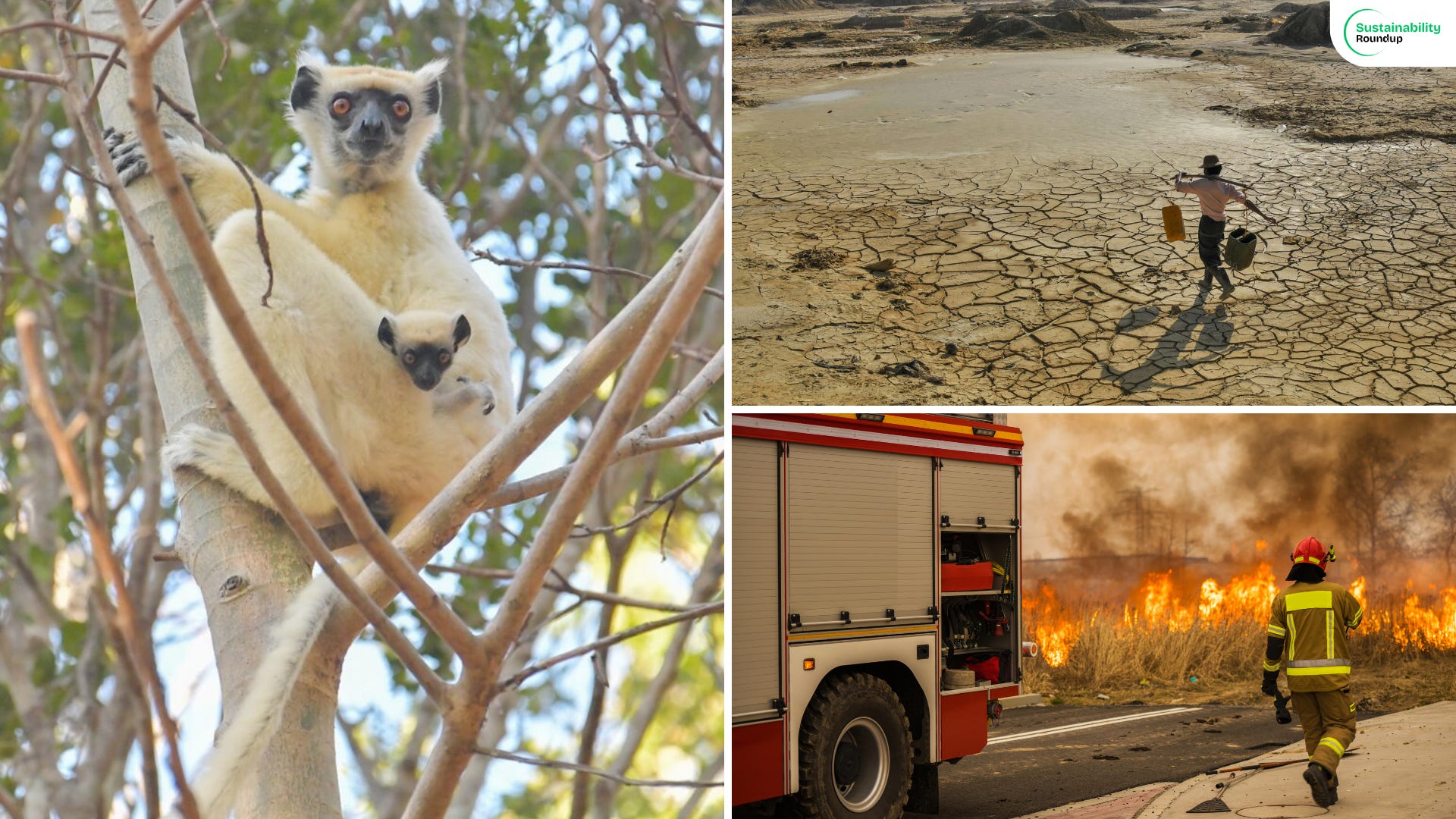
Google’s proposed US$15 billion data centre investment in India is facing scrutiny over groundwater use and its proximity to wildlife habitats, illustrating how AI infrastructure is colliding with environmental limits. The story is not about whether digital infrastructure should expand but whether companies have underestimated ecological constraints that can delay projects, raise costs and erode their social licence to operate. Businesses pursuing AI growth should treat biodiversity and water stewardship as strategic investment criteria rather than compliance exercises, although governments also need clearer frameworks to avoid creating prolonged regulatory uncertainty. Growth increasingly belongs to companies that can secure ecological legitimacy alongside technological capability.
2. The Race to Save the World’s 100 Most Threatened Species
Scientists and conservation organisations have launched renewed efforts to prevent the extinction of the world’s 100 most threatened species, highlighting how biodiversity loss is becoming irreversible for many ecosystems. While such initiatives demonstrate global ambition, focusing on saving species at the brink of extinction risks diverting attention from addressing the economic systems that continue driving habitat destruction. Long term resilience depends less on emergency conservation and more on redesigning supply chains, land use and financial incentives before ecosystems reach irreversible tipping points.
3. Climate Change Greatly Increased Europe’s Wildfire Risk, Study Finds
A new scientific study concludes that climate change substantially increased the likelihood of the extreme weather conditions that fuelled Europe’s devastating wildfires. The findings reinforce that climate impacts are no longer future scenarios but present operational risks affecting insurance, infrastructure, supply chains and public finances, yet many organisations continue treating adaptation as a secondary priority. Companies that embed climate resilience into capital allocation today will be better positioned than those relying on historical weather patterns to guide future investments.

Business leaders often view the energy transition as a challenge of scaling renewable technologies and improving efficiency. However, emerging research argues that technological progress alone will not deliver sustainable outcomes if the underlying assumptions guiding energy policy remain unchanged.
Research published in “Just” Energy? An Ecofeminist Analysis and Critique of a Predominant Conception of Energy argues that framing energy primarily as a commodity has shaped policies that favour economic growth, markets and technological solutions while overlooking justice, care and ecological relationships.
The authors highlight that:
Viewing energy as a market commodity reinforces extractive systems that deepen both environmental degradation and social inequalities.
Energy transitions focused solely on technology risk overlooking the governance, power structures and inequities that influence long term sustainability outcomes.
Indigenous, local and lived knowledge are essential for designing resilient energy systems but remain underrepresented in mainstream policy and decision making.
Achieving a just energy transition requires rethinking energy governance to balance economic objectives with equity, environmental stewardship and collective wellbeing.
As governments and businesses invest heavily in clean energy, the paper suggests that the real transformation lies not only in changing energy sources but also in changing the values and governance systems that shape how energy is produced, distributed and accessed.

The next phase of sustainability is no longer about setting targets but redesigning how businesses create value.
Listen to this episode of Sustainable Connections on how organisations are embedding climate considerations into strategic decision making, capital deployment and business transformation to build resilience in a rapidly changing operating environment.

Missed our recent issues? Catch up anytime by reading our full archive here 📖.
That’s it for today’s roundup! We’ll see you next Thursday with another set of inspiring sustainability news and updates. Until then, take a moment to reflect on how you can adopt one new sustainable practice this week. Every small step counts! 🌍✨
Have any thoughts or a sustainable practice you'd like to share? Share your feedback here.
Together, we can make a difference. See you in the next edition of the Sustainability Roundup!