

Welcome to this week’s Sustainability Roundup!
This week reflects a reality check for sustainability as environmental limits, energy shocks, and corporate actions expose the gap between ambition and execution. The focus is shifting from setting targets to managing real-world constraints, where progress depends on how effectively organisations balance impact, risk, and economic viability.
Scroll for more!


1. Global Heat Limits Breached for 35% of Population
A new study by The Nature Conservancy reveals that over a third of the world’s population now lives in regions where heat and humidity regularly exceed safe thresholds for human activity, signalling a growing livability crisis. While climate discussions often focus on emissions, this data highlights an immediate human constraint that could reshape labour productivity, urban planning, and migration patterns. The narrative of climate risk is shifting from future projections to current physiological limits, yet adaptation strategies remain underdeveloped and unevenly distributed. This forces businesses to rethink workforce models and geographic exposure, but the absence of scalable adaptation frameworks makes response fragmented.
2. IEA Warns of Worst Ever Energy Supply Shock
The head of the International Energy Agency, Fatih Birol, has warned that the ongoing Iran conflict has triggered a supply disruption of 11 million barrels per day, surpassing the scale of past oil crises. Proposed solutions such as remote work and demand reduction indicate how behavioural shifts are being reconsidered as policy tools, but they also expose the lack of structural energy resilience despite years of transition efforts. Energy systems remain deeply vulnerable to geopolitical shocks, questioning how diversified current transition pathways truly are. Companies may need to embed flexibility into operations, yet policy responses remain reactive rather than structurally transformative.
3. PepsiCo Achieves 100% Water Replenishment in High-Risk Areas
PepsiCo has announced it has reached full water replenishment across its company-owned manufacturing sites in high water-risk regions, marking a significant milestone in corporate water stewardship. While this demonstrates measurable progress and sets a benchmark for peers, it also raises questions about scope, as supply chains and agricultural inputs often account for far greater water impact. Corporate sustainability is advancing fastest where metrics are controllable, but systemic impact still depends on broader ecosystem engagement. This signals a shift toward measurable, site-level accountability, though it risks overstating impact without full value chain integration.

The Ambidextrous Organisation Framework, grounded in the Review of Organizational Ambidexterity Research, shows that high-performing firms do not treat change as a linear shift but as a capability to manage competing priorities simultaneously. In sustainability, this translates into advancing low-carbon and circular innovations while continuing to operate existing business models that fund and stabilise the transition.
The research distinguishes between:
Structural ambidexterity, where sustainability initiatives are separated into dedicated units with different processes and incentives.
Strategic ambidexterity, where leadership integrates these efforts into a unified direction.
This dual approach is especially critical in sustainability, where innovation requires speed and experimentation, but impact depends on scale and integration into core operations.
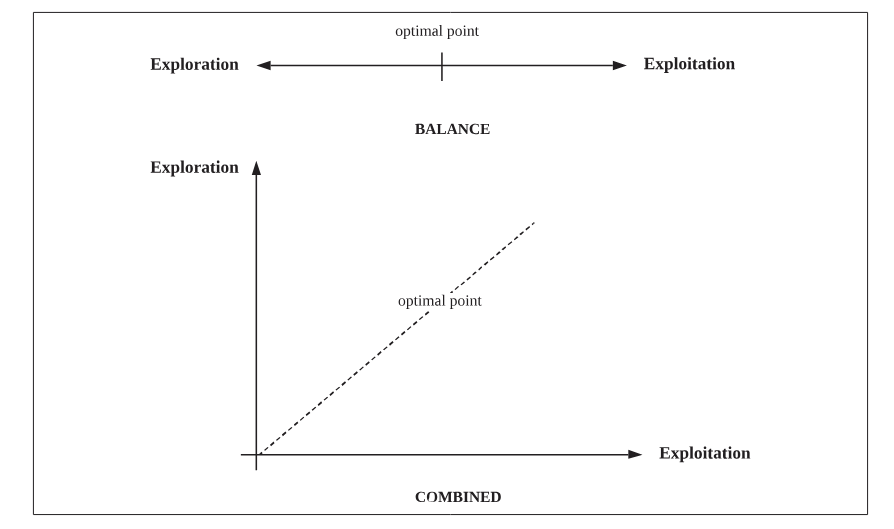
How to apply this in sustainability strategy:
Build separate sustainability teams with clear resources and freedom to experiment without short term performance pressure.
Align leadership and strategy so sustainability priorities are embedded into core business decisions and capital allocation.
Scale what works by integrating proven sustainability solutions back into core operations over time.
The key learning is that sustainability transformation fails when companies try to “blend” it into existing systems too early. Real progress comes from protecting innovation and integrating it only when it is mature enough to scale, turning sustainability from a side initiative into a core driver of long-term competitiveness. Read the study here.
Image Courtesy: Fig 5. Measurement of Organizational Ambidexterity, Kassotaki (2022)

Harvard Business School’s Climate Rising episode featuring Simon Haldrup highlights a critical reality in sustainable development: regenerative agriculture will not scale on environmental intent alone.
Despite strong long-term benefits, adoption remains limited due to farmer economics, transition risks, and short-term yield pressures, showing that sustainability succeeds only when financial incentives, data, and business models are aligned. Listen to learn more!

Missed our recent issues? Catch up anytime by reading our full archive here 📖.
That’s it for today’s roundup! We’ll see you next Thursday with another set of inspiring sustainability news and updates. Until then, take a moment to reflect on how you can adopt one new sustainable practice this week. Every small step counts! 🌍✨
Have any thoughts or a sustainable practice you'd like to share? Share your feedback here.
Together, we can make a difference. See you in the next edition of the Sustainability Roundup!
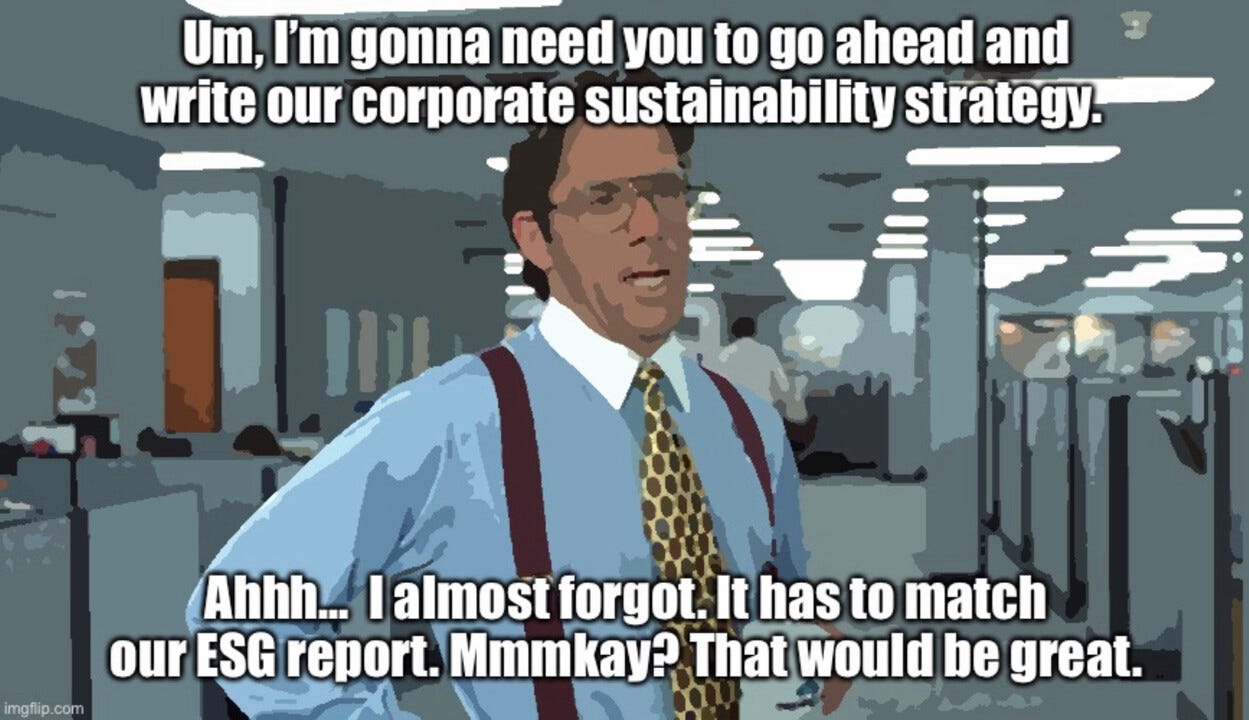
That last cartoon image...too good. Appreciate the roundup!
We’re not replacing systems as fast as we’re adding new ones; global energy demand keeps rising, and fossil fuels still dominate the mix.
If we don’t talk about reducing demand alongside building new systems, we’re just rebranding growth, not transforming it.