

Welcome back to this week's Sustainability Roundup.
Sustainability risks rarely emerge in isolation. From chemical liability and labour unrest to geopolitical shocks, organisations are being challenged to rethink how they manage products, people and supply chains. At the same time, customers are increasingly rewarding businesses that demonstrate trust, transparency and resilience, proving that sustainability has become a strategic driver of long term competitiveness, not just compliance.
Scroll for more!

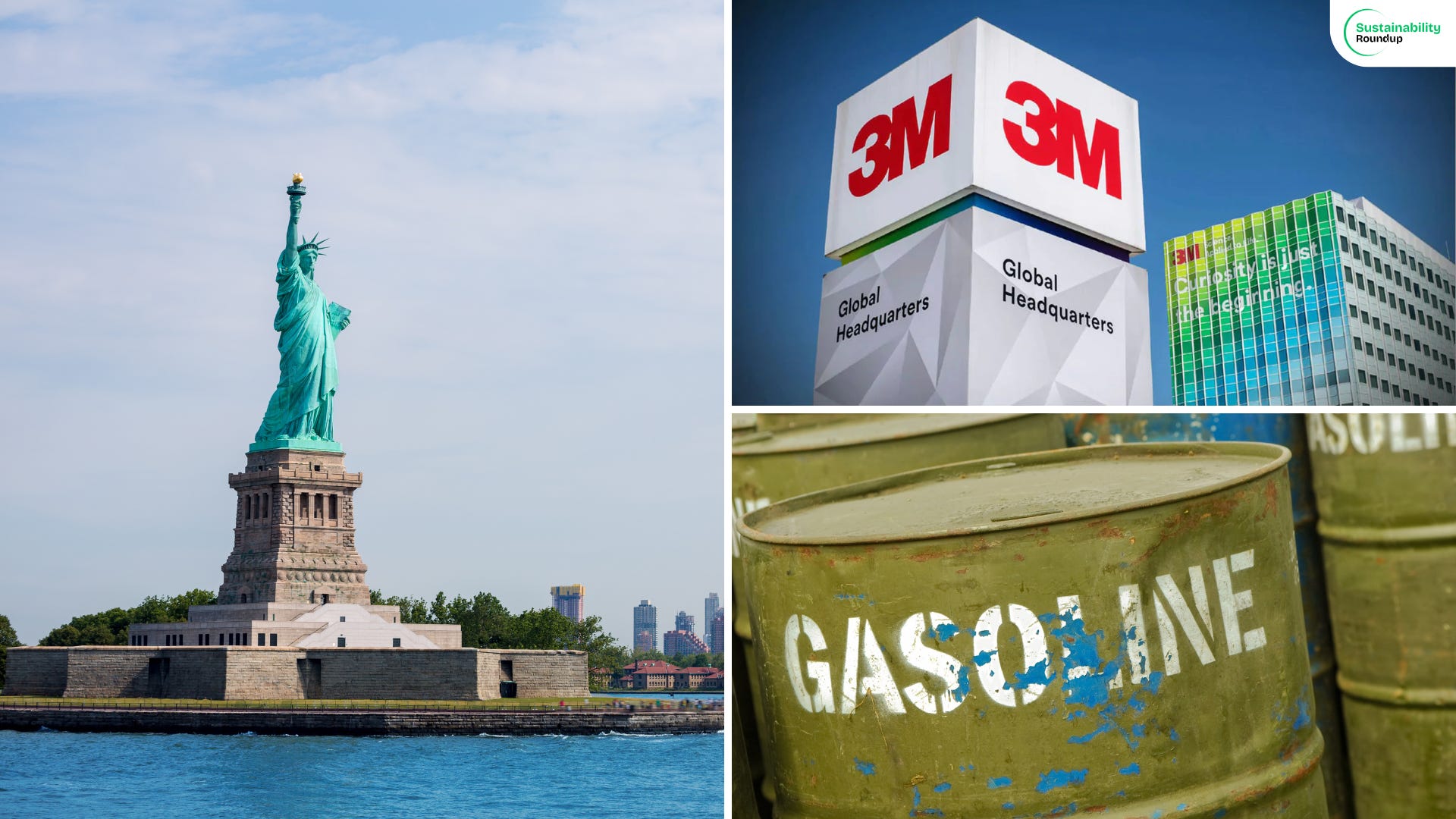
1. New York Sues 3M and DuPont Over ‘Forever Chemicals’
New York has filed a lawsuit against 3M, DuPont and other chemical companies, alleging they knowingly sold consumer products containing toxic PFAS while concealing the associated health and environmental risks. The case signals that environmental liability is extending beyond pollution remediation to product stewardship and consumer protection, reinforcing that businesses can no longer treat chemical transparency as a compliance issue but as a strategic risk with long term legal, financial and reputational consequences.
2. Airbus Workers Strike Over Working Conditions in Spain
Employees across Airbus sites in Spain have launched strikes over deteriorating working conditions, including wage concerns, stricter attendance policies and reduced workplace flexibility. As companies pursue operational efficiency and industrial transformation, the dispute highlights that neglecting workforce wellbeing can undermine resilience, productivity and supply chain reliability, making social sustainability a strategic business issue rather than simply a human resources responsibility.
3. Oil Prices Rise Following Fresh US Strikes on Iran
Oil prices climbed after renewed US military strikes against Iran intensified concerns over supply disruptions and stability in the Strait of Hormuz, one of the world’s most critical energy corridors. The episode underscores how geopolitical shocks continue to expose the vulnerability of fossil fuel dependent economies, strengthening the strategic case for energy diversification and resilient supply chains while reminding businesses that energy security remains inseparable from sustainability strategy.

Sustainability is increasingly being shaped by customers rather than regulators. Buyer Power, one of Porter’s Five Forces, explains how customers influence business strategy through their ability to demand greater value, transparency and performance. As sustainability expectations rise, buyers are increasingly rewarding companies that can demonstrate credible environmental and social impact while penalising those that cannot.
Research by Christian Homburg, Wayne D. Hoyer and Nicole Koschate in Customers’ Reactions to Price Increases: Do Customer Satisfaction and Perceived Motive Fairness Matter? (2005) found that:
Customers judge business decisions based on perceived fairness, not just price or product quality.
When customers believe a company’s motives are fair and transparent, they are more likely to remain loyal, even when faced with higher prices or difficult business decisions.
Trust built through positive customer experiences strengthens long term relationships and reduces customer sensitivity to change.
Perceptions of corporate intent can be just as influential as financial value in shaping purchasing behaviour.
As sustainability becomes an increasingly important purchasing criterion, buyer power extends beyond cost and quality to include transparency, ethical conduct and environmental performance. Companies that demonstrate credible sustainability practices are therefore better positioned to earn trust, strengthen customer loyalty and create lasting competitive advantage.
Read more here.

Procurement is no longer a back office function but a strategic driver of resilience, sustainability and cost competitiveness.
Listen to how AI, supplier visibility and better sourcing decisions can strengthen supply chain resilience, demonstrating why proactive procurement capabilities are becoming a critical source of long term competitive advantage.

Missed our recent issues? Catch up anytime by reading our full archive here 📖.
That’s it for today’s roundup! We’ll see you next Thursday with another set of inspiring sustainability news and updates. Until then, take a moment to reflect on how you can adopt one new sustainable practice this week. Every small step counts! 🌍✨
Have any thoughts or a sustainable practice you'd like to share? Share your feedback here.
Together, we can make a difference. See you in the next edition of the Sustainability Roundup!