

This week, we examine a shift in strategic thinking that sustainability leaders can no longer ignore. As environmental and social challenges become more interconnected, competitive advantage is moving beyond individual organisations and towards the ecosystems they help create. The question is no longer how sustainable your organisation is, but how effectively it enables sustainability across the networks around it.

1. New World Screwworm Outbreak Raises Fresh Food Supply Chain Risks
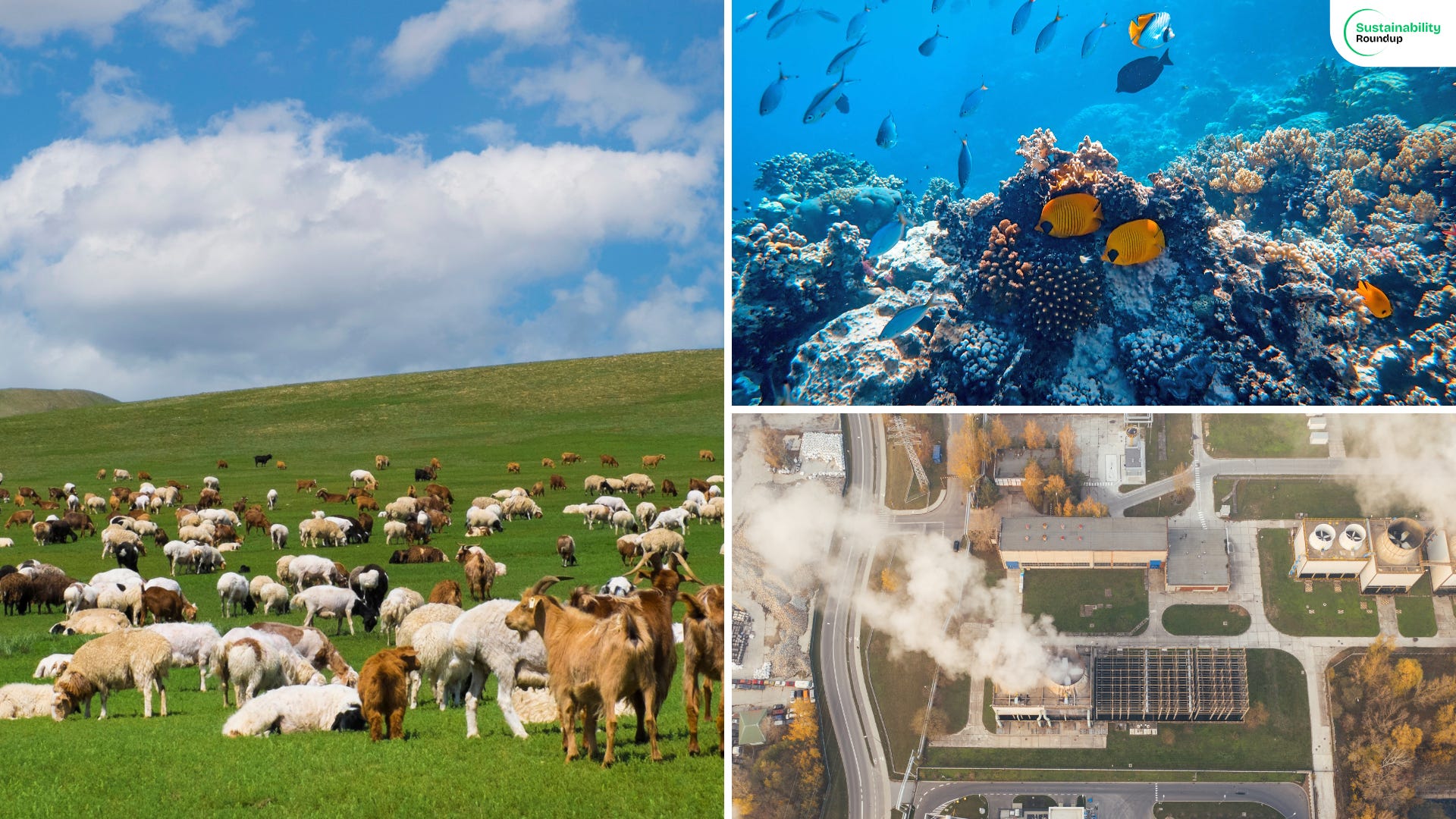
The spread of New World screwworm is raising concerns across livestock systems as the parasite threatens cattle, pets, wildlife, and potentially human health. While often viewed as an agricultural issue, the outbreak highlights how biological risks can disrupt entire food supply chains through livestock losses, higher veterinary costs, trade restrictions, and reduced farmer incomes. The critical challenge is that food system resilience remains heavily dependent on prevention and monitoring, yet investment in biosecurity often receives far less attention than productivity improvements. Farmers may bear the greatest burden despite contributing the least to the underlying systemic vulnerabilities.
2. Antibiotic Resistance Genes Found Across World Oceans
Researchers have identified antibiotic resistance genes across major ocean basins, including remote waters, reinforcing concerns that antimicrobial resistance is becoming a planetary scale environmental issue rather than solely a healthcare challenge. The findings suggest oceans are acting as reservoirs and transport systems for pollutants linked to human activity, including antibiotic residues and waste streams. While companies increasingly focus on climate and plastics, antimicrobial resistance remains significantly underrepresented in sustainability strategies despite posing material risks to public health, food systems, and economic productivity.
3. Australia Opens First Carbon Refinery Turning CO₂ Into Products
Australia has launched its first carbon refinery, converting captured industrial CO₂ into products such as concrete, paper, and glass through mineral carbonation technology. The development signals an important shift from viewing carbon solely as waste to treating it as a potential industrial feedstock. However, the broader sustainability question remains whether carbon utilisation can scale quickly enough to address emissions at the magnitude required, or whether it risks becoming a niche solution that improves efficiency without fundamentally reducing dependence on carbon intensive production systems.

Most sustainability strategies focus on improving internal performance. The Delta Model by Hax and Wilde (2002) suggests that this may not be enough. The framework argues that long term value is increasingly created through strong relationships with customers, partners, suppliers, and complementors rather than through competition alone.
Sustainability challenges are increasingly interconnected, meaning organisations rarely succeed through internal action alone.
Scaling clean technologies, improving climate resilience, and building circular business models often depend on strong ecosystems of partners, suppliers, customers, and investors.
The Delta Model’s concept of “system lock-in” suggests organisations can create lasting value by strengthening these networks, making sustainable solutions easier to adopt and more difficult to replace.
One of the paper’s key conclusions is that organisations achieve stronger and more durable performance when they focus on deep customer bonding rather than competing solely through product features or market positioning. For sustainability leaders, this suggests that lasting impact is more likely when sustainable solutions are embedded into stakeholder relationships and become integral to how customers, partners, and communities create value.
Read more here.

This discussion from London Climate Action Week examines how AI can accelerate sustainability decision making, improve data driven insights, and support climate action. It also highlights the importance of women’s leadership in ensuring AI is deployed ethically, inclusively, and responsibly.
The key strategic sustainability challenge is balancing technological innovation with equity, governance, and long term societal resilience to create sustainable competitive advantage.

Missed our recent issues? Catch up anytime by reading our full archive here 📖.
That’s it for today’s roundup! We’ll see you next Thursday with another set of inspiring sustainability news and updates. Until then, take a moment to reflect on how you can adopt one new sustainable practice this week. Every small step counts! 🌍✨
Have any thoughts or a sustainable practice you'd like to share? Share your feedback here.
Together, we can make a difference. See you in the next edition of the Sustainability Roundup!