

Hello there!
Sustainability Roundup is moving to Mondays. From now on, you will start each week with the latest sustainability news and strategic thinking.
This week's sustainability story was about accountability as much as ambition. In New York, the UN Secretary General asked every country for a dated plan to exit fossil fuels. Scientists confirmed that seven of nine planetary boundaries are now breached. Brussels decided that Europe's AI build out will be measured in kilowatt hours and litres of water. Targets alone no longer carry much weight, and the organisations that lead the next decade will be the ones that can show their numbers.

1. UN Climate Summit: Guterres Demands Dated Roadmaps Out of Fossil Fuels
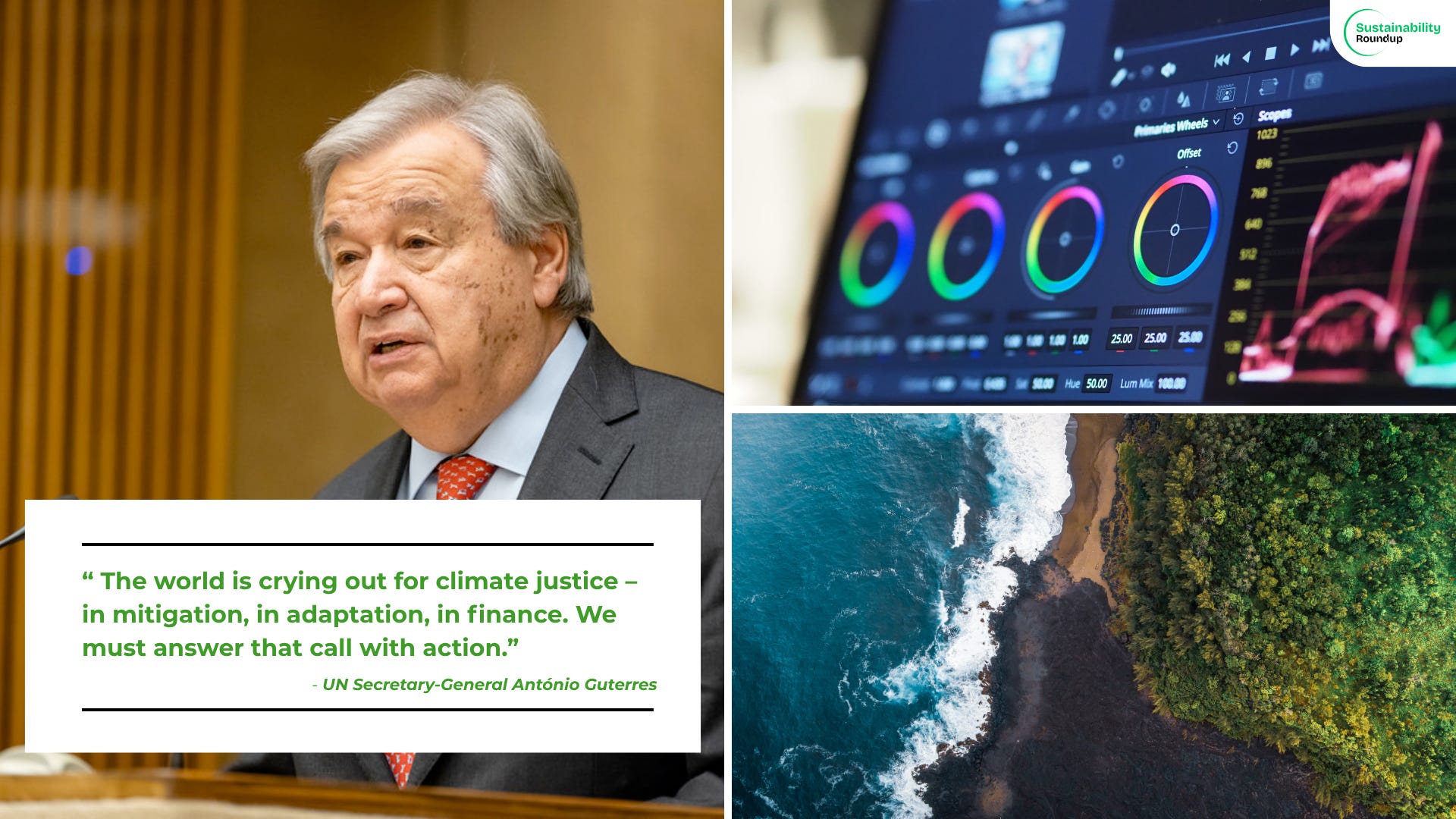
At the UN Climate Summit on 23 September, Guterres asked every country for a fossil fuel exit plan with clear timelines. He told the G20, which produces about 80% of global emissions, to lead, and called for $1.3 trillion a year in climate finance by 2035. A new Global Grids Accelerator targets the 2,500 GW of renewables waiting for grid connections, which makes it the summit's most practical outcome. The roadmap appeal has no enforcement behind it, and it came just a week after Washington scrapped its power plant carbon rules. Investors will increasingly judge transition plans on dated timelines and grid access rather than headline targets.
2. EU to Grade Data Centres From A to G on Energy and Water Use
Brussels proposed appliance style energy and water labels for every data centre above 500 kW, starting in 2027. Sites will also get credit for reusing waste heat, adding clean power and supporting grid flexibility. Rewarding a site's contribution to the energy system is smart, but the energy grade measures efficiency, not total demand. That means a site can score an A while still straining local grids and water supplies. Expect label grades to show up in cloud procurement and Scope 3 conversations, with water and waste heat becoming part of how sites get approved.
3. Seven of Nine Planetary Health Boundaries Breached and Worsening
More than 60 scientists at the Potsdam Institute found seven of nine planetary boundaries breached, all at record levels and all still worsening. Climate, biodiversity, nutrient flows and novel entities such as plastics sit in the high risk zone, and land carbon sinks are weakening. The diagnosis is strong, but the report again stops short of saying what a fair share looks like for a country or a company. The weakening sinks raise permanence risk for forest based offsets. Nature and chemical pollution, not only carbon, will shape the next round of disclosure and supply chain scrutiny.

Many sustainability leaders assume their biggest opportunity lies in cutting emissions and costs inside their own operations. The paper Creating Sustainable Value by Hart and Milstein suggests that this view is too narrow. The authors argue that most managers see sustainability as a nuisance of regulation, cost and liability. They show instead that it can create value in four ways: cutting pollution, stewarding products, developing clean technology and building a long term sustainability vision. Firms create sustainable value only when they perform across all four.
For sustainability managers, this raises four important questions:
Is our sustainability agenda mostly about reducing cost and risk today, with little invested in tomorrow’s growth?
Are we engaging suppliers, customers and communities across the full life cycle of our products, or only managing our own footprint?
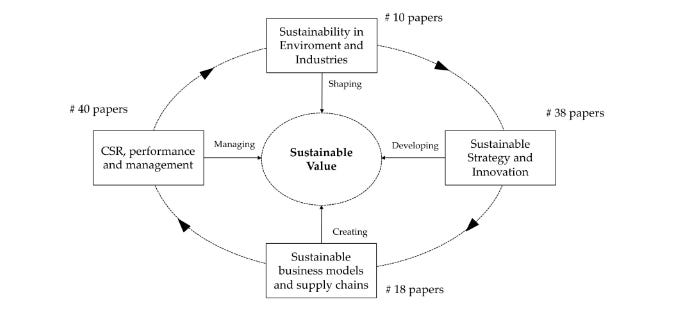
Image courtesy: Fig. 2, Hart & Milstein (2003), Academy of Management Executive
Which emerging technologies could make our current products or processes obsolete, and are we building capability in them now?
Do we have a clear view of which unmet social and environmental needs could become our next growth market?
The paper challenges a common assumption that sustainability is mainly an operational efficiency exercise. Efficiency gains in the lower quadrants protect today’s business, but they do not secure tomorrow’s. A portfolio concentrated in one quadrant leaves the company exposed, while a balanced portfolio turns sustainability from a compliance cost into a source of competitive advantage.

Listen to how owning or securing the sustainable assets behind your business, whether energy, materials or supply, can protect you from market volatility and give you pricing power your competitors lack.
In an era of geopolitical shocks, the companies that treat sustainability as a resilience strategy will be the ones customers trust when prices and supply become unpredictable.

Last week's results show that alliances rarely fail on execution. They fail before they start. With 42% citing leadership scepticism, the real barrier is strategic framing. Until startups are positioned as growth options rather than CSR projects, capability gaps will persist.

Missed our recent issues? Catch up anytime by reading our full archive here 📖.
That’s it for today’s roundup! We’ll see you next Monday with another set of inspiring sustainability news and updates. Until then, take a moment to reflect on how you can adopt one new sustainable practice this week. Every small step counts! 🌍✨
Have any thoughts or a sustainable practice you'd like to share? Share your feedback here.
Together, we can make a difference. See you in the next edition of the Sustainability Roundup!