

Welcome to this week’s Sustainability Roundup!
The shift from voluntary ESG to hard-coded industrial policy is accelerating. From the U.S. DOE’s AI alliances to the EU’s circular packaging mandates, sustainability is now a high-stakes race for technological sovereignty and resilience.
Leaders must move beyond reporting toward “material intelligence” and relational trust. As AI-driven discovery and digital traceability redefine competitive moats, success depends on managing the “affective” side of supplier relationships. Bridging the gap between high-tech monitoring and human collaboration will separate resilient leaders from “digital outsiders.”

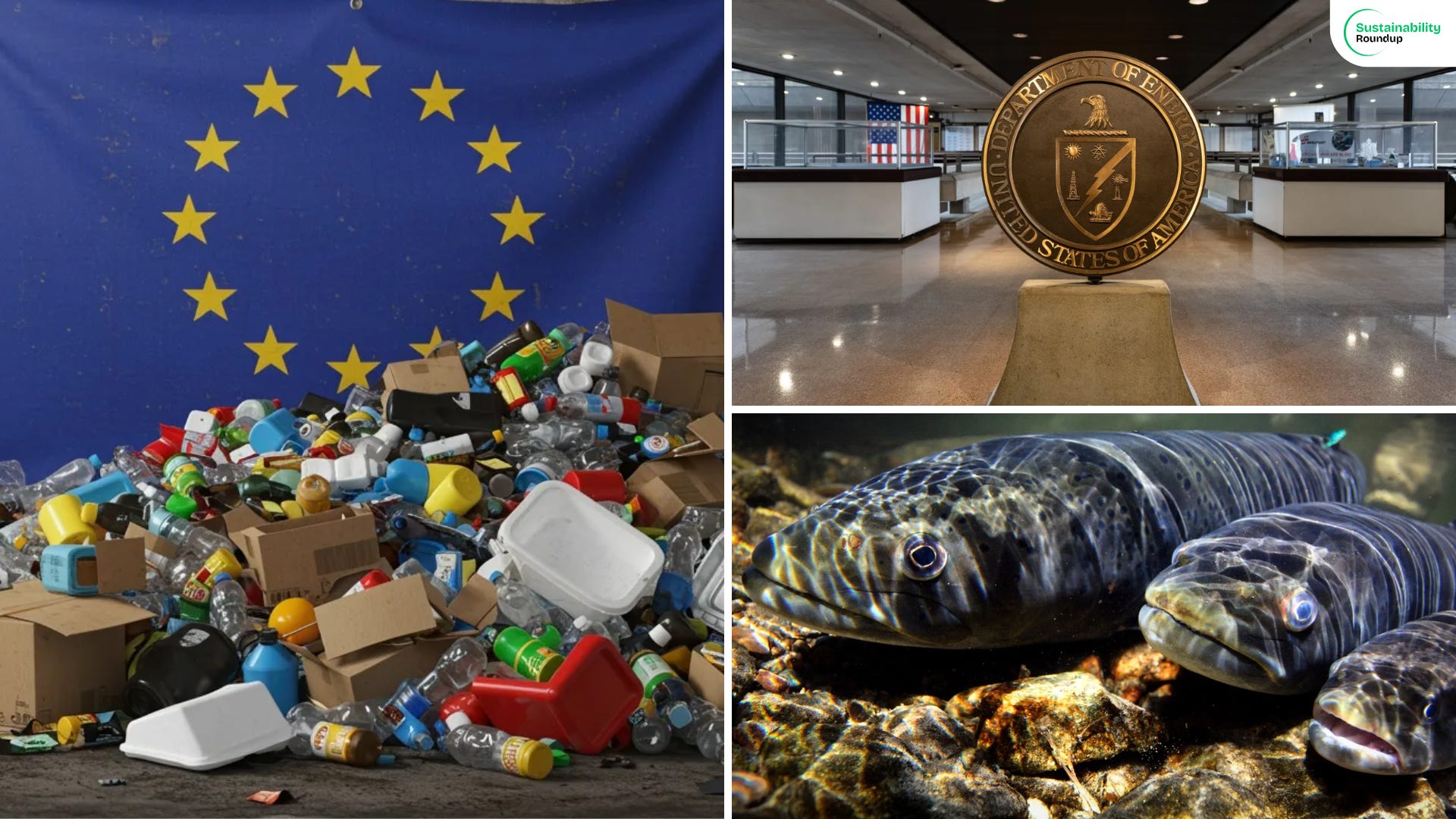
1. European Commission Issues New Packaging Rules Guidance to Cut Waste and Align EU Market
The European Commission has introduced comprehensive guidance to harmonize packaging rules across member states, focusing on reducing unnecessary packaging and mandating full recyclability by 2030. While this provides a unified blueprint for a single market, the aggressive timelines may create a "regulatory bottleneck" for SMEs who lack thecapital to overhaul production lines as quickly as multinational conglomerates. This shift forces a strategic transition from localized packaging designs to a unified, eco-modulated approach where market access is strictly contingent on a product's end-of-life viability.
2. U.S. DOE and Amazon Launch AI-Driven Critical Materials Hub to Secure Domestic Supply Chains
The U.S. Department of Energy and Amazon have partnered to launch the Critical Materials Collaborative, leveraging generative AI to accelerate the discovery and processing of minerals essential for clean energy and high-tech defense. This partnership significantly shortens the R&D cycle for energy independence, yet it risks creating a black box of proprietary AI insights that could marginalize smaller players in the circular economy who lack access to such advanced computational power. This development signals that material security and AI sovereignty are now the primary pillars of national economic resilience and long-term supply chain autonomy.
3. Freshwater Fish Populations Plunge 81% as River Migrations Collapse
A sweeping global report from the CMS reveals that migratory freshwater fish populations have plummeted by 81% since 1970 due to river fragmentation and human pressures like dams. While restoring river connectivity is vital for biodiversity, it presents a direct strategic conflict for the hydropower sector and regional water management authorities who must now balance renewable energy targets with ecosystem survival. This collapse indicates that "nature-positive" strategies must move beyond terrestrial forests to address the systemic risks of aquatic infrastructure and biological supply chains.

The Porter Hypothesis, developed by Michael E. Porter, positions environmental regulation not as a cost burden but as a strategic lever to unlock innovation, productivity gains, and competitive advantage. Rather than minimising compliance costs, leading firms use regulatory pressure to fundamentally redesign products, processes, and business models for superior efficiency and differentiation.
Reframe regulation as an innovation trigger, not a constraint : Managers should treat environmental regulations as signals for inefficiency embedded within current operations. Instead of reacting defensively, firms can proactively identify where emissions, waste, or resource intensity indicate lost economic value, using regulation as a catalyst to rethink design, materials, and processes.
Translate environmental inefficiencies into productivity opportunities : Once hotspots are identified, companies should quantify how reducing energy use, material waste, or emissions can directly improve margins, asset utilisation, and throughput. Embedding these insights into operational KPIs and capital allocation ensures sustainability initiatives are prioritised based on value creation, not just compliance.
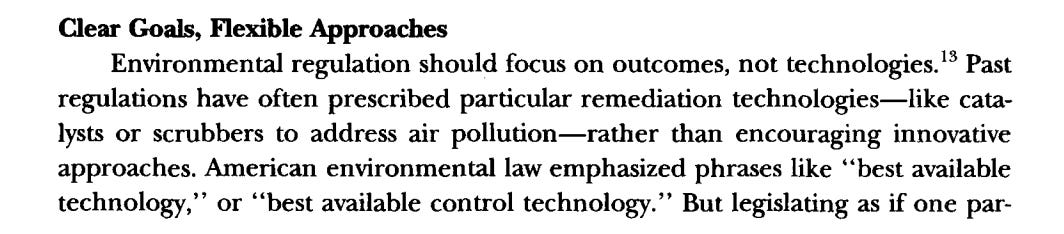
Image Courtesy: Journal of Economic Perspectives, Page. 110.
Redesign core operations for resource efficiency and differentiation : The final step is to embed innovation into the operating model through cleaner technologies, circular processes, and smarter product design. Companies that act early can lower cost structures, enhance product value, and build defensible advantages as regulations tighten and laggards face rising compliance costs.
The Porter Hypothesis is increasingly relevant as carbon pricing, disclosure mandates, and green regulations expand globally, rewarding firms that convert sustainability pressure into innovation-led growth while exposing those that treat it as a reporting exercise. Read more here.

Listen to this latest HBR Podcast talk about how sustainability strategies succeed when anchored in core value creation rather than customer goodwill, by eliminating green premiums and embedding sustainability into product and operating models.
However, this lens risks underestimating segments where regulation, brand trust, or ethical demand do drive willingness to pay, making over-reliance on cost parity a potentially limiting strategic assumption.


Missed our recent issues? Catch up anytime by reading our full archive here 📖.
That’s it for today’s roundup! We’ll see you next Thursday with another set of inspiring sustainability news and updates. Until then, take a moment to reflect on how you can adopt one new sustainable practice this week. Every small step counts! 🌍✨
Have any thoughts or a sustainable practice you'd like to share? Share your feedback here.
Together, we can make a difference. See you in the next edition of the Sustainability Roundup!