

Hi there! 👋
This week, the strategic roadmap for sustainability hit a critical inflection point. The latest UN data confirms our trajectory still dangerously exceeds the 1.5°C threshold, underscoring that current national pledges, while numerous, are not sufficient. This sobering reality is pushing high-level policy like the EU’s new 2040 target and accelerating the debate over risky, large-scale interventions, forcing every enterprise to fundamentally reassess its current pace of climate action and its role in a world grappling with a near-term overshoot.

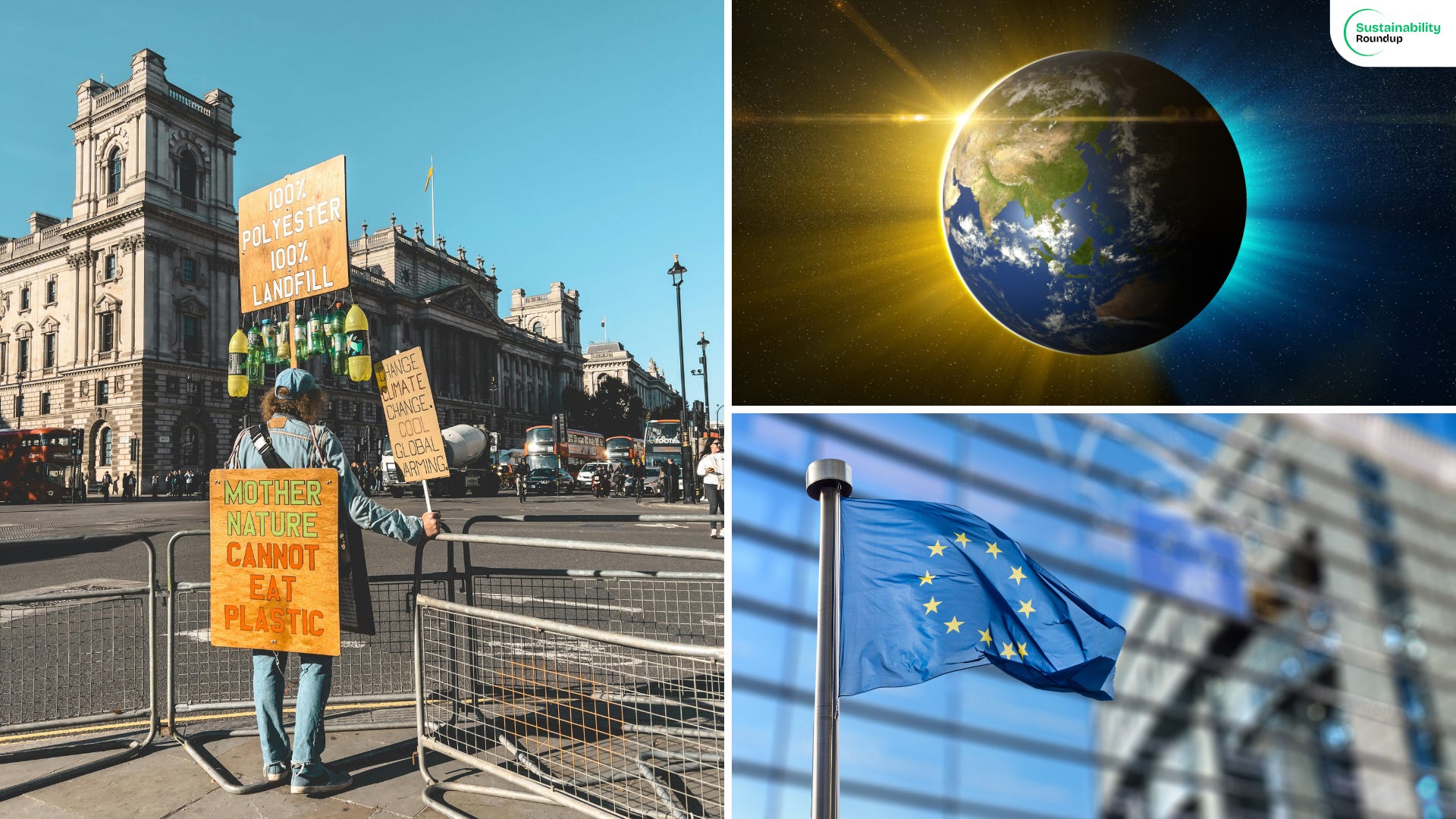
1. Global Warming Projections Barely Shift Despite New NDCs, UN Warns. 🌡️
The UNEP Emissions Gap Report 2025 finds that even with full implementation of updated national pledges, the world remains on course for 2.3 to 2.5°C of warming, far from the 1.5°C Paris goal. Global emissions reached a record high in 2024, driven by growth in major emerging economies, revealing a widening gap between ambition and action. The corporate net-zero narrative now stands increasingly detached from policy realities, forcing firms to prepare for higher transition risks and a likely dependence on future carbon removal technologies.
2. European Union Adopts 90% Emissions Reduction Goal for 2040, With Carbon Credit Flexibility. 🇪🇺
Ahead of COP30, the EU approved a target to cut emissions by 90 percent by 2040 compared to 1990 levels, marking a milestone in its climate strategy. However, the deal allows member states to meet part of their goals through international carbon credits, a move that could outsource real reductions and weaken domestic accountability. The reliance on flexible carbon mechanisms risks undermining policy credibility and deterring the deep industrial investments essential for a genuine net-zero transition.
3. Uncoordinated Solar Geoengineering Could Wreak Regional Climate Havoc, Royal Society Report Warns. ☀️
A new Royal Society report warns that unilateral or poorly coordinated solar geoengineering could unleash severe regional impacts such as droughts in Africa or intensified Atlantic hurricanes. These interventions, which only mask rather than mitigate climate change, pose a complex blend of scientific, ethical, and geopolitical risks. For global companies, this emerging frontier demands a rethink of long-term climate resilience and governance as interventions in Earth systems become a tangible strategic variable.

The Hambrick & Fredrickson Strategy Diamond provides a board-level framework for embedding sustainability not as a CSR add-on but as a core source of competitive advantage. It helps managers translate sustainability purpose into measurable business performance through five integrated dimensions: Arenas, Vehicles, Differentiators, Staging, and Economic Logic.
Arenas (Where to Compete) identify sustainability domains aligned with the firm’s strategic strengths, such as renewable energy, sustainable packaging, or ethical sourcing. IKEA redefined its arena to include the circular economy through resale and refurbish programs, expanding from retail to resource stewardship. ♻️
Vehicles (How to Compete) determine the path to build sustainability capabilities, whether through internal R&D, partnerships, or acquisitions. Schneider Electric scaled its green analytics capacity via acquisitions like ETAP and RIB, reinforcing its energy management ecosystem. 🚀
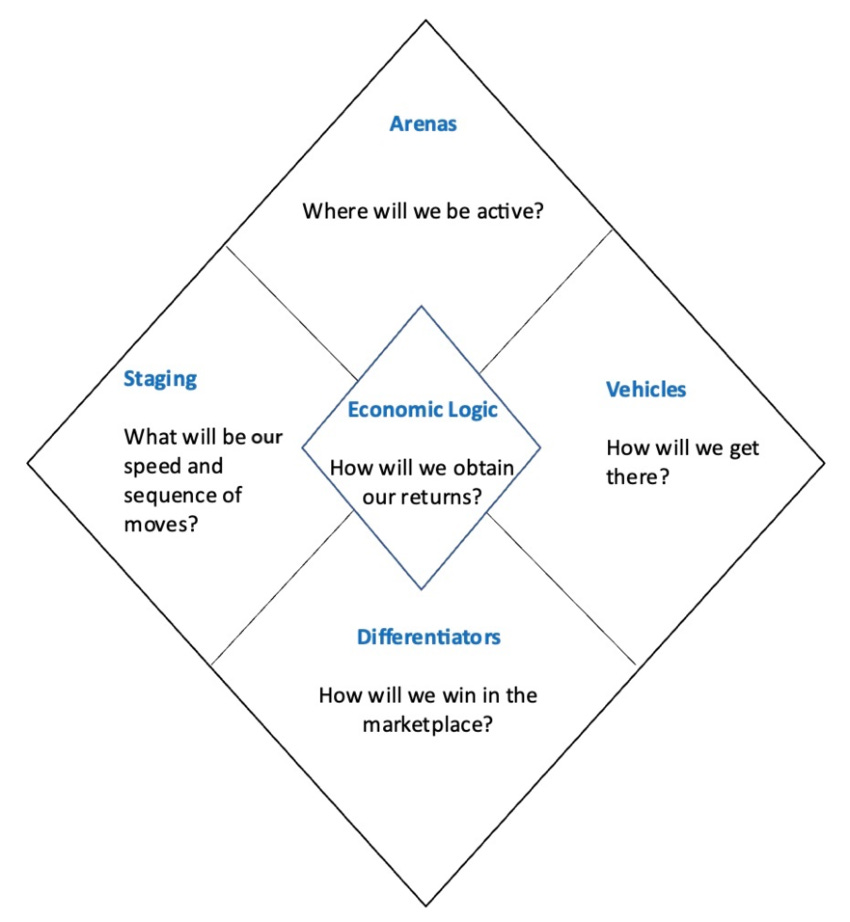
Differentiators (Why Customers Choose You) 🌱 integrate sustainability into the core value proposition to create market distinction and deepen brand trust. Patagonia’s activism and full supply-chain transparency serve as powerful differentiators, strengthening loyalty and pricing power.
Staging (When and at What Pace) ⏳ sequences sustainability initiatives strategically to balance ambition, credibility, and resource allocation. Unilever phased its transformation, beginning with purpose-led branding, then embedding measurable KPIs across operations and suppliers.
Economic Logic (How Value is Created) 💰 connects sustainability to the firm’s profit engine through efficiency gains, innovation-led growth, or long-term risk reduction. Tesla’s vertical integration and closed-loop battery design drive cost and performance advantages directly linked to its sustainable mission.
Read how Tiffany & Co. illustrates the framework in action. The case exemplifies how strategic coherence in sustainability translates into enduring value and reputation resilience. Read more here.
Image Courtesy: Adaptation of Strategy Diamond (Hambrick, D.C. & Fredrickson, J.W., 2001)

Listen to a timely conversation with leaders from Applied Materials on how executive governance and business design can accelerate sustainability performance. 🎧
True decarbonisation progress comes when sustainability moves from a specialist function to an integrated leadership capability aligning incentives, decision rights, and innovation goals across the C-suite.

In our last poll, 43% of readers believed transparency alone cannot drive sustainable impact, showing the need to link disclosure with measurable action and outcomes. Missed our last issue? Read it here.

Missed our recent issues? Catch up anytime by reading our full archive here 📖.
That’s it for today’s roundup! We’ll see you next Thursday with another set of inspiring sustainability news and updates. Until then, take a moment to reflect on how you can adopt one new sustainable practice this week. Every small step counts! 🌍✨
Have any thoughts or a sustainable practice you'd like to share? Share your feedback here.
Together, we can make a difference. See you in the next edition of the Sustainability Roundup!