

Hi there!
This week highlights a deeper strategic tension in sustainability - the gap between reported progress and real impact. As companies lean on mechanisms like carbon credits while policy signals remain inconsistent, credibility is emerging as the defining currency of climate leadership.
Scroll for more!

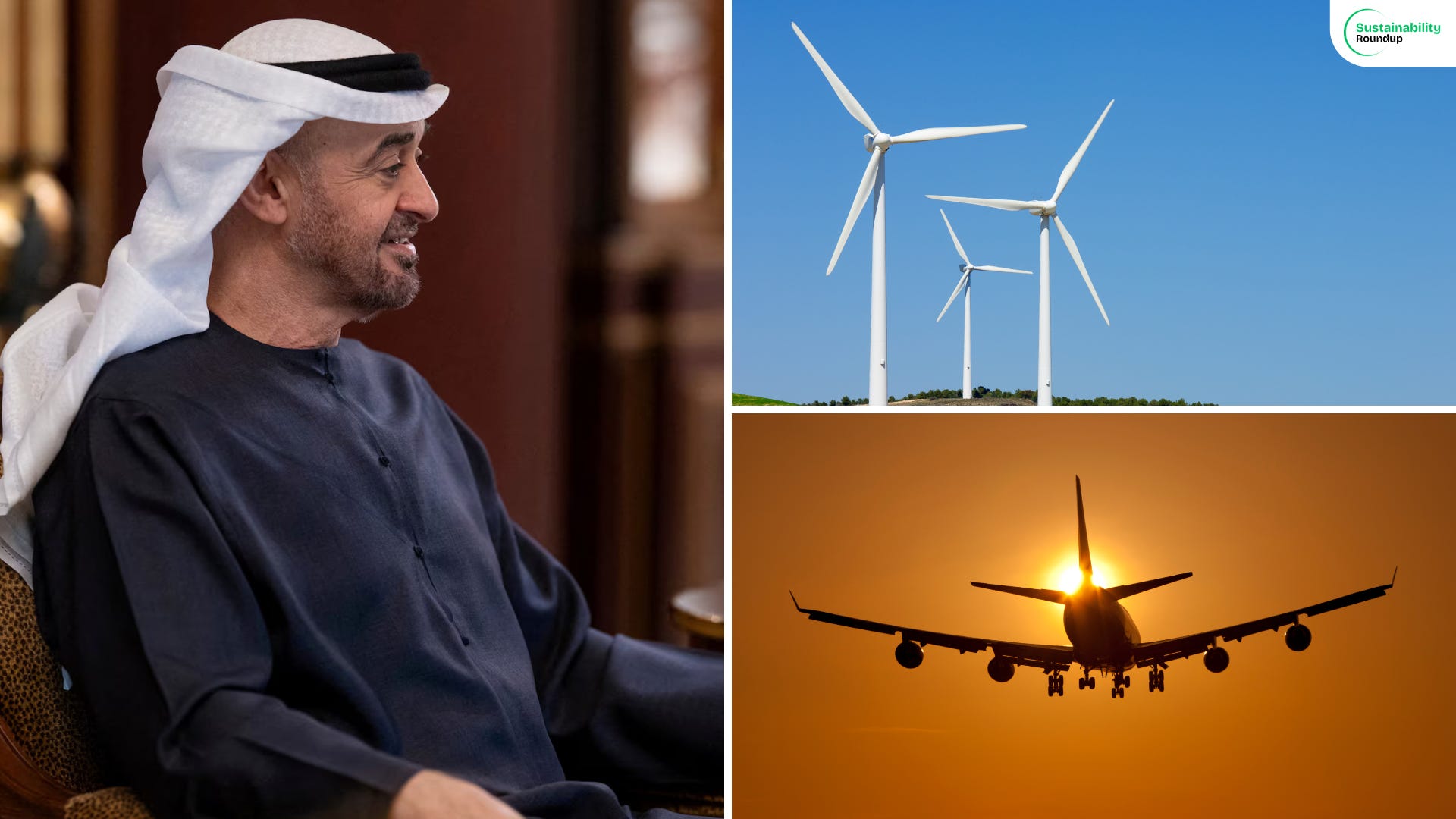
1. Boeing leans on carbon removal, raising concerns over delayed aviation decarbonization
Boeing has secured 20,000 tonnes of high-quality carbon removal credits using direct air capture and bioenergy with carbon capture and storage technologies, signaling a strategic shift toward engineered solutions to address aviation’s hard-to-abate emissions. While this demonstrates leadership in scaling emerging carbon markets, it also raises concerns about over-reliance on offsets instead of accelerating operational and fuel innovation. This move positions carbon removal as a parallel decarbonization pathway but risks delaying systemic transformation in aviation.
2. US halts offshore wind expansion, redirects $885 million to fossil fuels
The US government has paused offshore wind lease sales while redirecting significant funding toward fossil fuel investments, marking a sharp policy reversal in energy transition priorities. This shift introduces regulatory uncertainty for clean energy investors and highlights the fragility of transition pathways when exposed to political cycles. It underscores that sustainability strategies must now account for geopolitical volatility as much as technological feasibility.
3. UAE exits OPEC, signaling a new era of fragmented energy strategy
The UAE has exited OPEC after nearly six decades, seeking greater control over its oil production strategy amid geopolitical tensions and restrictive quotas, while positioning itself for higher output and strategic autonomy. While framed as an economic and sovereignty move, this exit exposes deep fractures in global energy coordination and risks accelerating fossil fuel competition at a time when coordinated climate action is most needed. This signals a shift toward fragmented energy governance where national interest may override collective climate commitments, complicating global decarbonization pathways.

The paper “Is Green Growth Possible?” by Jason Hickel and Giorgos Kallis challenges a central assumption in sustainability strategy: that economic growth can be cleanly decoupled from environmental impact. The authors distinguish between relative and absolute decoupling, finding limited evidence that absolute, sustained reductions are happening at the scale required to meet climate goals.

At the core of the paper is the idea of “false decoupling.” Many economies report declining territorial emissions, creating the perception that growth is becoming cleaner. However, this often excludes emissions embedded in imported goods, meaning production has simply shifted to other regions rather than reduced overall. When assessed through consumption based accounting, emissions frequently “recouple” with GDP, revealing that environmental pressures are being displaced, not eliminated
This reframes sustainability from a reporting exercise to a value chain challenge. Without integrating Scope 3 emissions and supply chain transparency, organizations risk overstating progress. Real decarbonization requires addressing where emissions occur globally, not just where they are reported.
Read the paper here.

Hear from Christiana Figueres alongside Mary Robinson and Vanessa Nakate on how fossil fuel dependence is shaped by debt pressures, subsidy structures, and geopolitical realities.
While the transition is gaining momentum, the discussion highlights how structural financial constraints continue to slow meaningful progress.

Where do you stand on the role of carbon markets in credible climate strategy?
Missed our recent issues? Catch up anytime by reading our full archive here 📖.
That’s it for today’s roundup! We’ll see you next Thursday with another set of inspiring sustainability news and updates. Until then, take a moment to reflect on how you can adopt one new sustainable practice this week. Every small step counts! 🌍✨
Have any thoughts or a sustainable practice you'd like to share? Share your feedback here.
Together, we can make a difference. See you in the next edition of the Sustainability Roundup!