

Hi there 👋
This week’s sustainability developments show how quickly the transition is moving from ambition to execution. From shipping decarbonization to renewable infrastructure and carbon finance, businesses are increasingly being tested on whether their sustainability strategies can remain commercially resilient under real world pressure.

1. Maersk Advances Shipping Decarbonization with First 100% Ethanol Voyage
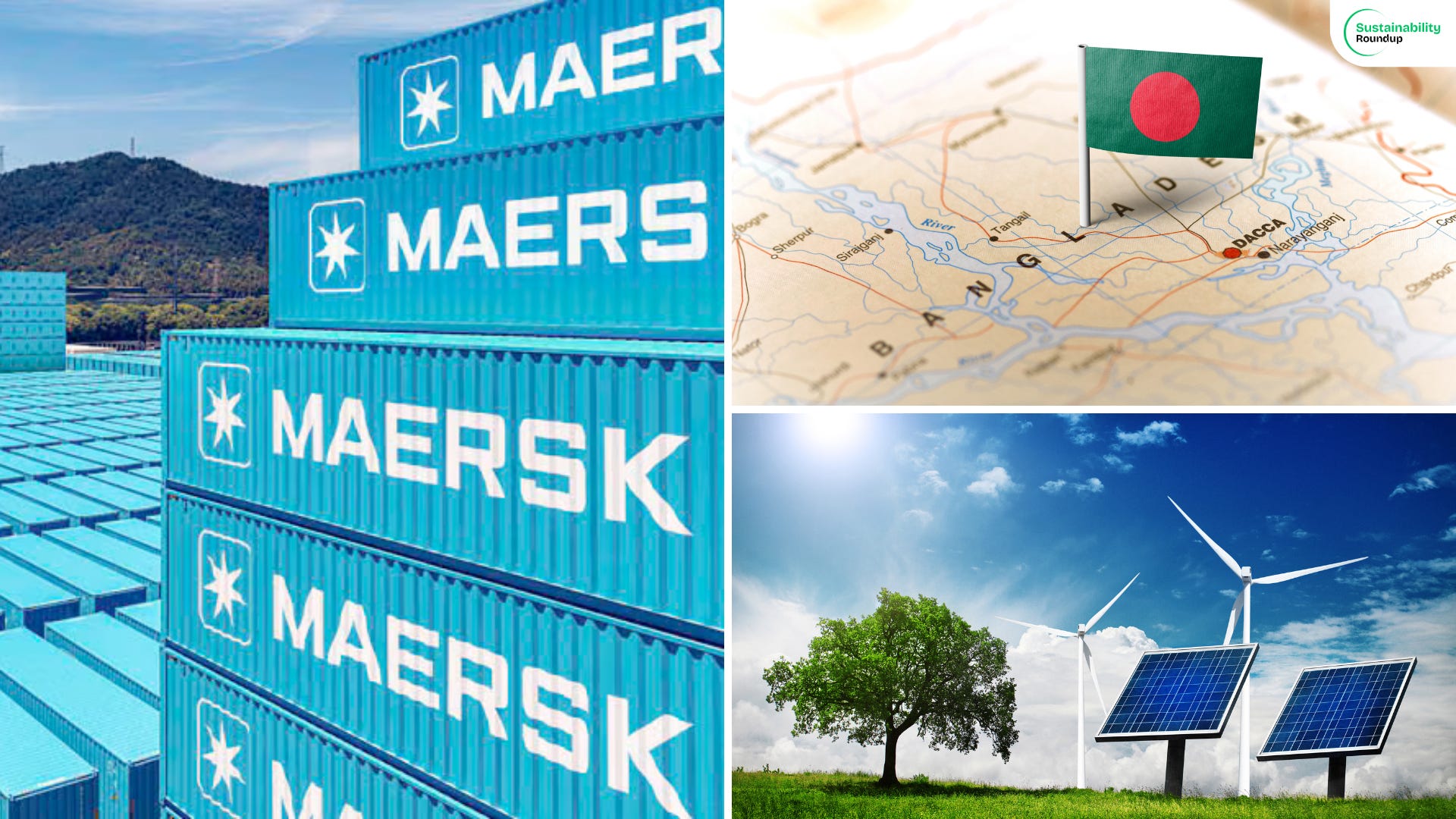
Maersk completed its first vessel voyage powered entirely by ethanol, signaling a major operational experiment in one of the world’s most difficult sectors to decarbonize. While the move reinforces how global logistics firms are racing to secure early mover advantage in alternative fuels, it also exposes a deeper industry uncertainty around which low carbon fuel pathways will ultimately scale economically and sustainably. Companies dependent on global trade may increasingly need to evaluate supply chain resilience not just through cost and speed, but through future fuel compatibility and emissions exposure.
2. Bangladesh Farmers to Earn Carbon Revenue from First Verra Agroforestry Credits
Bangladesh’s first Verra certified agroforestry carbon credit initiative will allow smallholder farmers to generate revenue through climate linked land management, expanding carbon finance beyond industrial scale projects into rural economies. The development highlights a growing strategic shift where ecosystems are being reframed as financial assets capable of driving both climate adaptation and local income generation, though persistent concerns around carbon market credibility, transparency, and equitable value distribution continue to challenge long term trust in the model. For businesses, this reflects how future sustainability strategies may increasingly depend on building socially inclusive climate finance mechanisms rather than relying solely on corporate offset purchases.
3. Renewable Power Is Now the Lowest Cost Infrastructure Investment
A new BlueSun whitepaper argues renewable power has now become the world’s lowest cost infrastructure investment, reinforcing how clean energy is rapidly transitioning from an environmental priority into a core economic competitiveness issue. Yet while generation costs continue falling, the larger strategic bottleneck is shifting toward transmission infrastructure, energy storage, and regulatory execution, areas where political and institutional delays could slow momentum despite favorable economics. Businesses delaying renewable integration may increasingly face cost disadvantages as investors and markets begin treating clean energy adoption as a marker of operational efficiency rather than sustainability leadership alone.

Stakeholder Theory argues that long term business resilience depends on how effectively companies manage relationships with regulators, employees, suppliers, customers, investors, and communities alongside shareholder expectations.
Research by Freeman, Hörisch, and Schaltegger found that companies integrating stakeholder mapping into sustainability strategy are better positioned to anticipate regulatory pressure, reduce operational risk, strengthen supply chain resilience, and identify new sources of long term value creation.
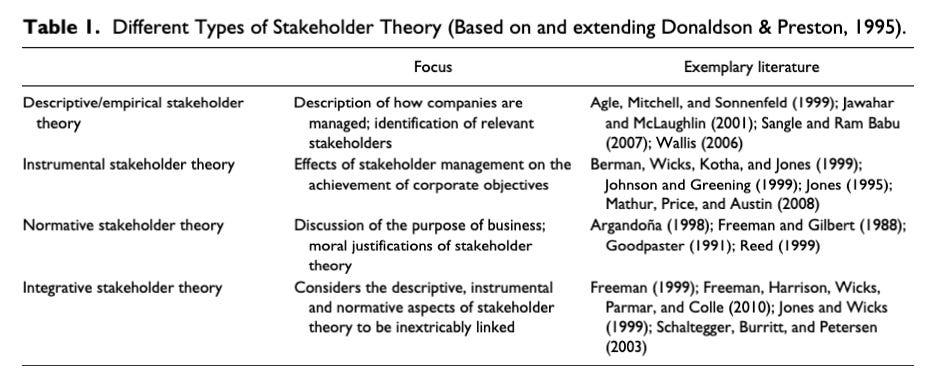
Stakeholder mapping is most effective when integrated into capital allocation, transition planning, procurement, and enterprise risk management rather than used only for reporting or engagement exercises.
Companies that identify shifting stakeholder expectations early are better positioned to anticipate regulatory change, supply chain disruption, and reputational risk before they become financial liabilities.
The strongest sustainability strategies treat stakeholder alignment as a competitive advantage tied directly to resilience, market access, and long term value creation.
The paper’s core insight is that sustainability strategies fail when companies manage stakeholders reactively. The firms creating durable competitive advantage are those embedding stakeholder intelligence directly into strategic planning and enterprise risk management. Read the paper here.
Image Courtesy: Table 1, Hörisch et al. (2014)

MIT Climate’s “A Hard Look at Steel” examines why one of the world’s highest emitting industries remains structurally difficult to decarbonize despite growing climate commitments.

The episode critically explores the economic, technological, and policy barriers slowing industrial transition, highlighting how future competitiveness may depend less on ambition and more on infrastructure readiness, energy access, and realistic transition financing. Listen here.

Missed our recent issues? Catch up anytime by reading our full archive here 📖.
That’s it for today’s roundup! We’ll see you next Thursday with another set of inspiring sustainability news and updates. Until then, take a moment to reflect on how you can adopt one new sustainable practice this week. Every small step counts! 🌍✨
Have any thoughts or a sustainable practice you'd like to share? Share your feedback here.
Together, we can make a difference. See you in the next edition of the Sustainability Roundup!
That ESG team meme hits hard 😅