

Hi there!
When an event on extreme heat is cancelled because of extreme heat itself, climate risk is no longer theoretical, it is operational. From tightening deforestation rules to growing uncertainty around climate finance, this week's developments show that resilience, resource security, and adaptability are becoming defining sources of competitive advantage.
Scroll to read more!

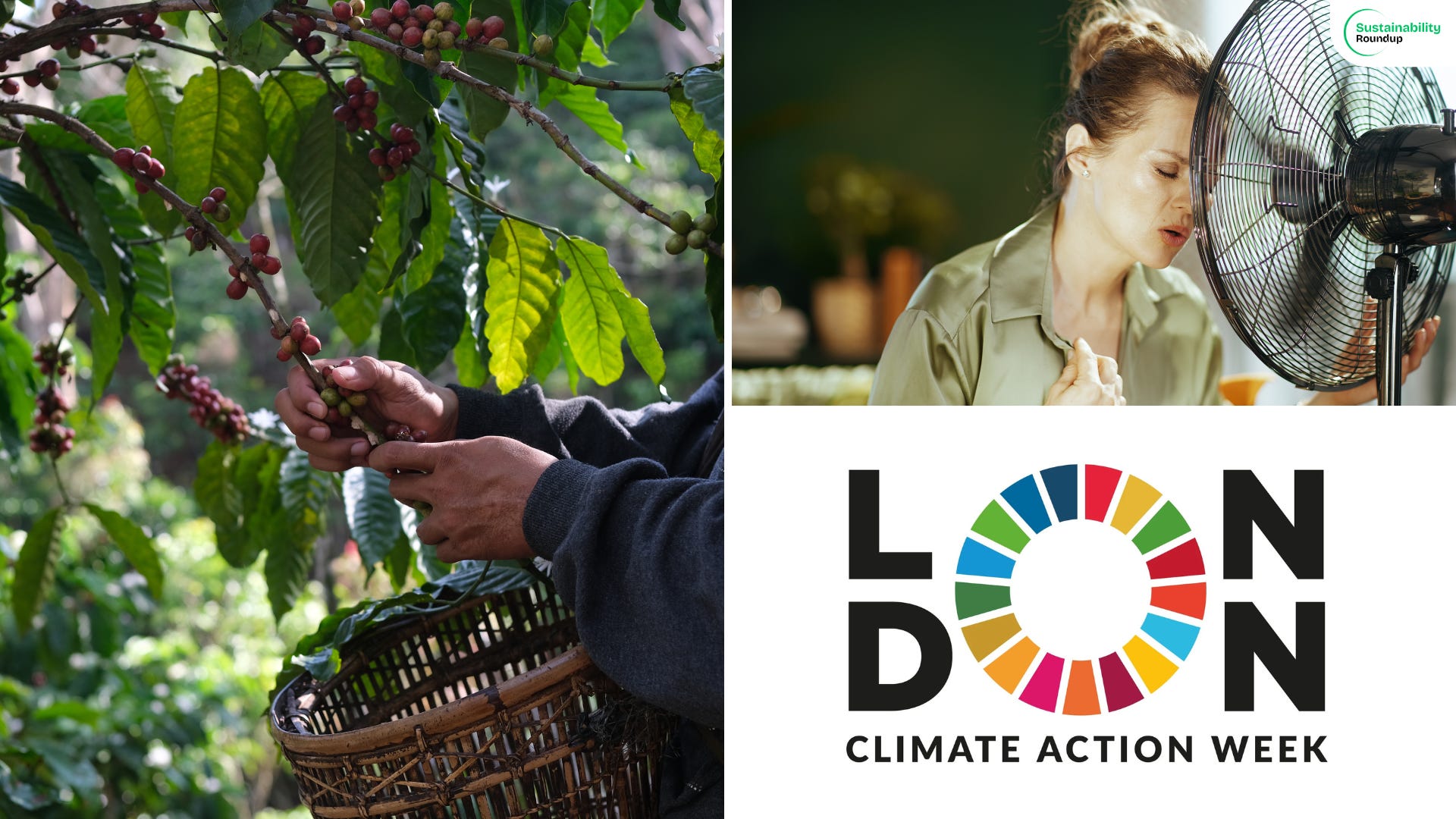
1. UK Tightens Deforestation Rules for Coffee, Cocoa, Soy and Palm Oil Supply Chains
The UK has announced stricter due diligence requirements to prevent products linked to illegal deforestation from entering its market, increasing accountability across global agricultural supply chains. While the policy strengthens expectations for supply chain transparency, its success will depend on robust enforcement and whether it addresses legal deforestation that can still contribute to biodiversity loss. Businesses should view end to end traceability as a strategic capability because market access is increasingly becoming contingent on supply chain credibility.
2. France Urges World Bank Not to Scrap Climate Target
France has urged the World Bank to retain its climate finance targets amid growing pressure to rebalance development priorities. The debate highlights how climate finance is becoming increasingly influenced by geopolitical priorities, creating uncertainty for organisations relying on long term investment signals. Businesses should prepare for greater volatility in sustainable finance rather than assuming global climate commitments will remain politically stable.
3. Extreme Heat Forces Cancellation of Extreme Heat Panel
An event dedicated to discussing the risks of extreme heat was itself cancelled because temperatures became too dangerous for participants, underscoring how climate impacts are already disrupting everyday operations. The incident is symbolic of a broader challenge: while organisations continue to debate adaptation, physical climate risks are increasingly dictating how and when business can operate. Climate resilience is rapidly becoming a core business continuity issue rather than a future sustainability initiative.

Ricardian Rent suggests that superior returns come from controlling scarce resources that competitors cannot easily replicate. Building on this idea, Barney's Resource Based View argues that organisations achieve sustained competitive advantage by developing resources and capabilities that are valuable, rare, difficult to imitate, and not easily substituted.
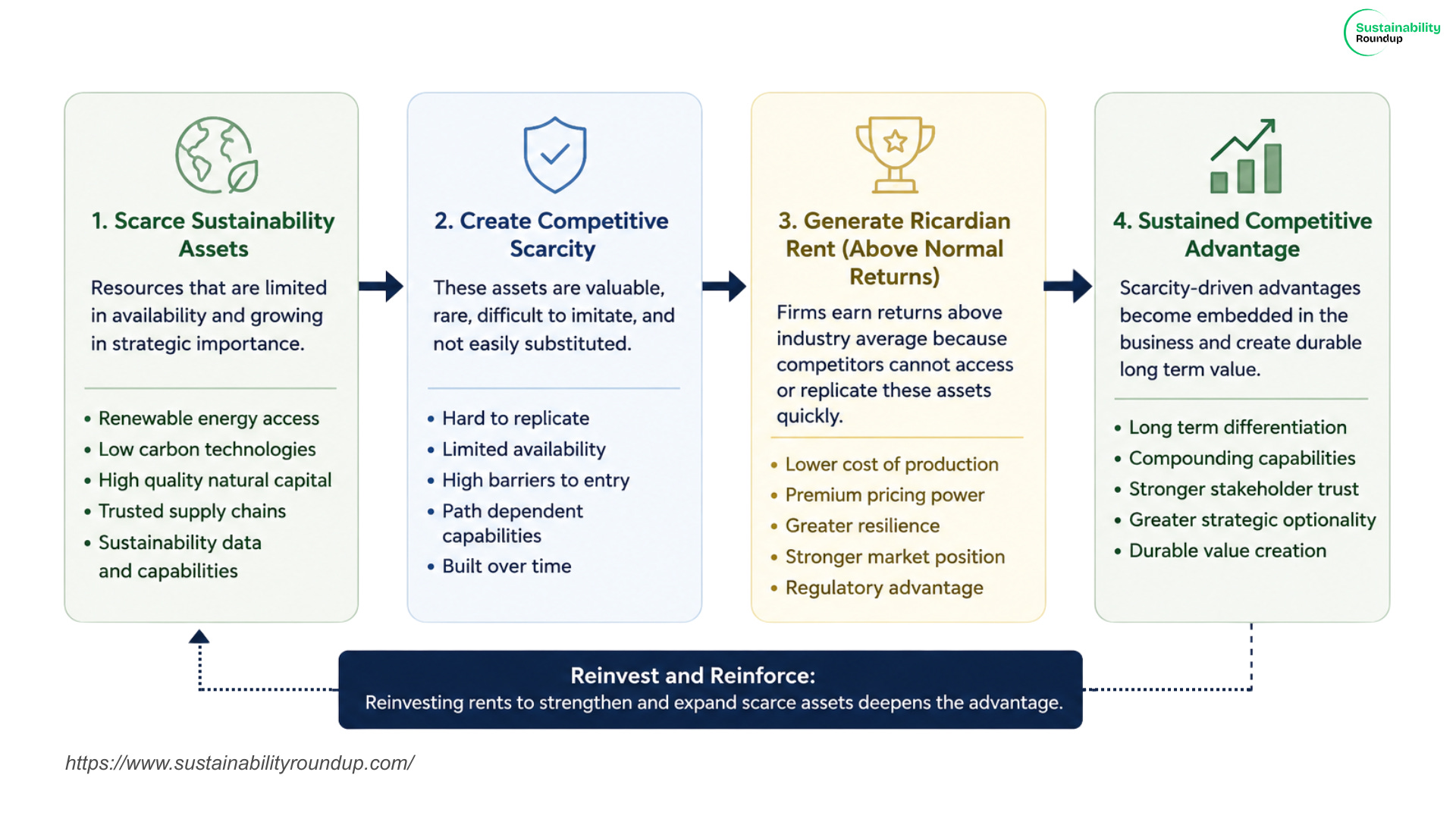
As sustainability reshapes markets, these strategic resources increasingly include access to renewable energy, resilient low carbon supply chains, proprietary clean technologies, high quality natural capital, and trusted sustainability data. Rather than viewing sustainability as a cost of doing business, organisations should see it as an opportunity to secure scarce capabilities that strengthen long term competitiveness in an increasingly resource constrained world.
Read more here.

Critical minerals are rapidly becoming a strategic constraint for the clean energy transition.
Listen to how Danielle Holly and Wen Yu Weng explore how applying circular economy principles to electronic waste can transform e waste into a resilient source of critical materials, helping organisations reduce supply chain risks, strengthen resource security, and build long term competitive advantage.


Missed our recent issues? Catch up anytime by reading our full archive here 📖.
That’s it for today’s roundup! We’ll see you next Thursday with another set of inspiring sustainability news and updates. Until then, take a moment to reflect on how you can adopt one new sustainable practice this week. Every small step counts! 🌍✨
Have any thoughts or a sustainable practice you'd like to share? Share your feedback here.
Together, we can make a difference. See you in the next edition of the Sustainability Roundup!