

Hi there!
This week highlights an important shift in sustainability strategy. Whether it is investors demanding measurable value, communities pushing back against resource intensive infrastructure, or growing scrutiny of corporate responsibility towards children, organisations are discovering that sustainability is no longer defined solely by what businesses choose to do. Increasingly, value is being shaped by the expectations of those they serve, influence and depend on.

1. Children Missing from Corporate ESG Despite Human Rights Pledges, UNICEF Warns
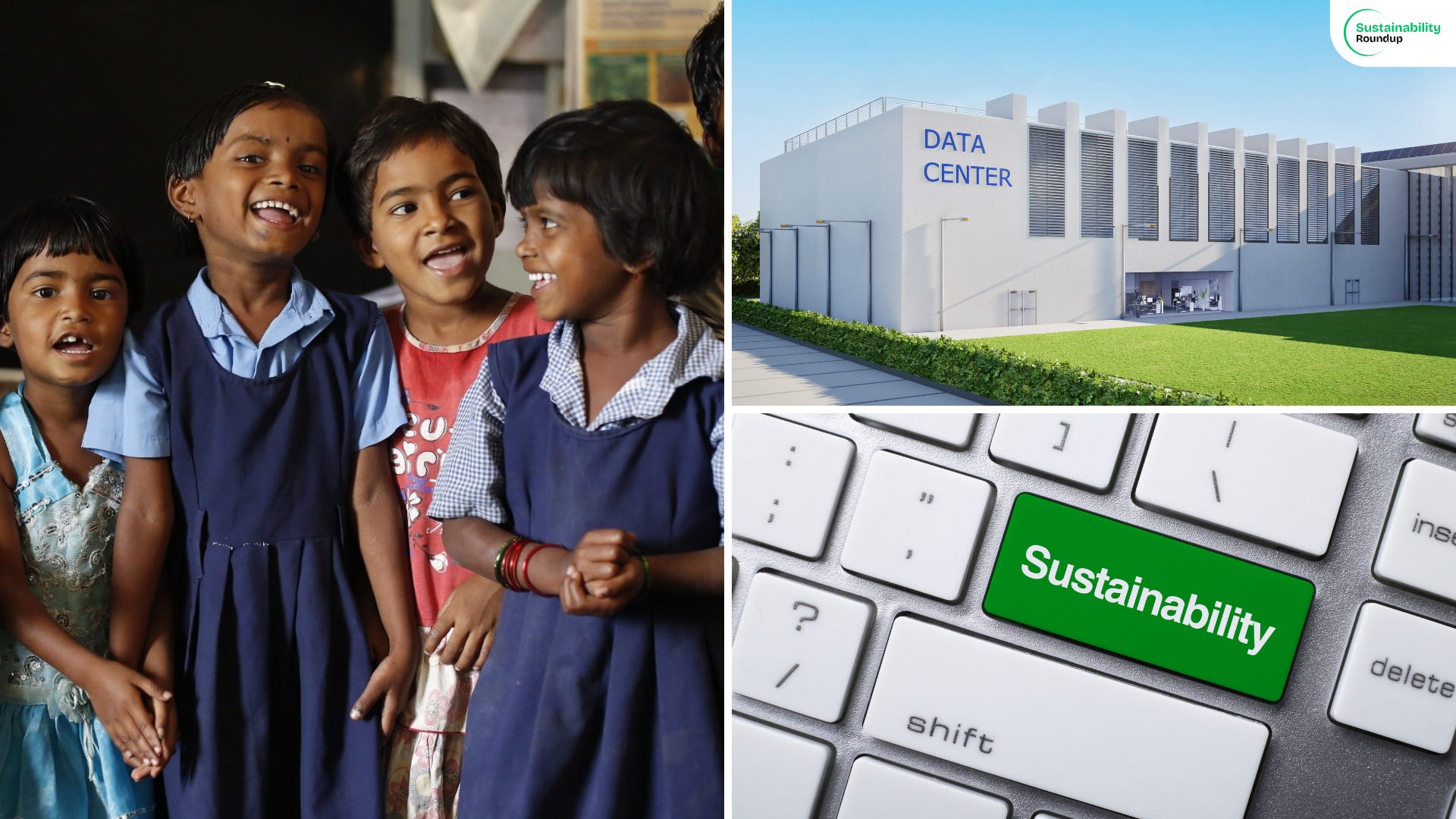
UNICEF has warned that despite widespread corporate commitments to human rights, children remain largely overlooked in ESG strategies, reporting and due diligence. The report challenges companies to recognise children as a distinct stakeholder group rather than assuming broader human rights policies adequately address their needs, reinforcing that incomplete stakeholder engagement can expose organisations to reputational, regulatory and operational risks while weakening long term social licence to operate.
2. Deloitte Launches AI Platform to Put a Financial Value on Sustainability
Deloitte has introduced an AI powered platform designed to quantify the financial value created by sustainability initiatives, helping organisations connect environmental and social performance with business outcomes. As boards increasingly demand evidence of return on sustainability investments, the announcement signals a shift from measuring activities to measuring enterprise value, while raising important questions about whether every sustainability outcome can or should be reduced to financial metrics.
3. Americans Push Back Against Data Centres as Communities Bear the Cost
Communities across the United States are increasingly opposing the rapid expansion of AI driven data centres over concerns about water use, energy demand, land development and local environmental impacts. The growing resistance demonstrates that infrastructure projects now require more than regulatory approval, with community acceptance emerging as a strategic asset that can influence investment timelines, operating costs and long term business resilience.

While buyer power shapes customer choice, Seller Power, one of Porter’s Five Forces, explains how organisations create competitive advantage through differentiated products, capabilities and brands that customers cannot easily substitute. In today’s markets, sustainability is increasingly becoming one of those differentiators, enabling businesses to compete on trust, innovation and long term value rather than price alone.
Research by Jay B. Barney in Firm Resources and Sustained Competitive Advantage (1991) argues that companies achieve lasting competitive advantage when they develop resources that are valuable, rare, difficult to imitate and effectively organised (the VRIO framework). Key learnings include:
Competitive advantage is sustained when firms build capabilities that competitors cannot easily replicate.
Intangible assets such as reputation, stakeholder trust and organisational culture often create greater long term value than physical assets.
Resources become strategic only when they deliver value to customers while remaining difficult for competitors to copy.
Organisations that continuously invest in distinctive capabilities are better positioned to outperform rivals over time.
As sustainability matures, environmental stewardship, responsible sourcing, transparent supply chains and trusted stakeholder relationships are increasingly becoming strategic resources rather than compliance activities. Companies that embed these capabilities into their business model strengthen seller power by creating differentiated value that competitors struggle to imitate, allowing them to command customer loyalty, reinforce brand equity and build enduring competitive advantage.

Despite growing political scrutiny and ESG fatigue, sustainability remains a fundamental driver of long term business value.
Listen to how Andrew Winston explains why leading companies continue to invest in resilience, innovation and decarbonisation, while offering practical insights on making the business case for sustainability, measuring return on investment and leading with courage in an increasingly uncertain world.

Results from last week's poll show that 73% of respondents believe companies should be responsible for sustainability risks across their entire value chain. This reflects a growing expectation that businesses move beyond operational boundaries, recognising that long term resilience, trust and competitiveness increasingly depend on managing impacts across interconnected value networks.
Missed our recent issues? Catch up anytime by reading our full archive here 📖.
That’s it for today’s roundup! We’ll see you next Thursday with another set of inspiring sustainability news and updates. Until then, take a moment to reflect on how you can adopt one new sustainable practice this week. Every small step counts! 🌍✨
Have any thoughts or a sustainable practice you'd like to share? Share your feedback here.
Together, we can make a difference. See you in the next edition of the Sustainability Roundup!